|
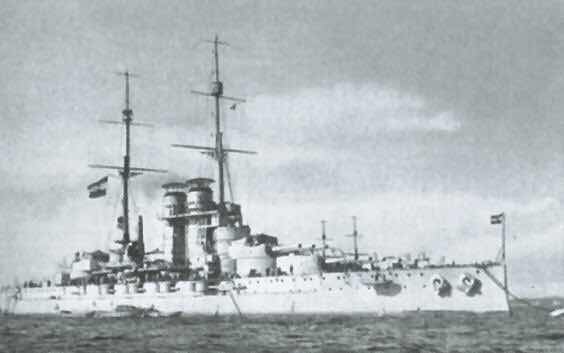
| Admiral Haus |
In early 1915 with the growing threat from the Entente navy
off the coast of Turkey and a concern for the safety of the Dardanelle straits
the Ottoman Empire asked for help from her Allies. The Turkish fleet did not
have the numbers to defeat the Entente Allies in a fleet engagement nor the
quality of vessels. Germany was unable to send any further surface vessels as
it would affect the delicate balance of ships in the North Sea and to send a
small force through the British blockade would more than likely see it
destroyed. Beyond this the overseas German naval units had already been
destroyed with only the light cruisers Dresden
and Königsberg cornered by the Royal
Navy in Tierra del feugo and Rufiji River respectively.
The burden passed to the Austro-Hungarian Empire and there was a certain amount of pressure for the Austrian fleet to sail for Constantinople and operate from there. This was of course unacceptable to the Austro-Hungarian Admiralty with several logistical concerns including that the Ottomans did not have the facilities to house or maintain such a fleet as well as the danger to the force as it sailed across the Mediterranean and, perhaps most important of all, leaving the Austro-Hungarian seaboard defenceless! Admiral Haus also believed that the time would come that war would come between Austro-Hungary and Italy and his fleet would be needed in the Adriatic.
Submarines were the best solution to the problem and Germany again pushed Austria to send two of their submarines, U-3 and U-4, to Constantinople and even offered to send German Sailors to crew them and two of their UB class submarines as compensation. By the 4 March Grand Admiral Tirpitz noted that they had received no response from Vienna which was a “story characteristic of the Austrians” (1) and Germany took steps to take control of the situation itself.
Submarines in the pre-war Austro-Hungarian fleet were seen as a bit of a novelty and, much like the rest of the world, naval planners preferred the more obvious power of surface ships in particular the Tegetthoff dreadnought. The merits of submarines had attracted some interest and the Dual Monarchy had several short range vessels in their possession which were perfectly suited for their needs, namely fighting their Adriatic rival Italy. As war with Britain and France loomed they turned to Germany to build them five longer range craft so that they could begin to menace the Mediterranean shipping lanes. War came before those larger craft were completed and the Austro-Hungarians were forced to sell their new vessels to the German Navy believing that none of the craft would survive running the British blockade.
Though Admiral Haus was hesitant in responding to the Germans there were moves to test their U-boats ability and on the 2 April Lineneschiffsleutnant Georg von Trapp departed Cattaro to attempt to raid the French fleet at Corfu. After an eighty five hour journey that saw an unsuccessful attack on a Victor Hugo class armoured cruiser all but two of the UB-5s crew had come down with sickness caused by cramped conditions and bad air. The Admiralty ruled the journey too dangerous for their smaller craft and only the U-12, with its range of 700 miles, was considered as the only vessel capable of going to Turkey.
Haus finally replied to Germany that the journey was too dangerous, that he lacked sufficient spare vessels, their own priorities in fighting the French blockade of the Adriatic and that Austro-Hungary would have been happy to help if their five longer range U-boats had been delivered. He did offer the olive branch that as soon as he was able to send support he would which gave his allies assurance that Austria would act but when he was ready and not before.
Germany had to take action. Three UB class U-boats were dispatched to Pola in April originally to replace the Austro-Hungarian U-boats sent to Turkey but now brought back under German control. Kapitänleutnant Hans Adam oversaw the arrival of each U-boat in fifteen pieces on eight railway flatbed trucks and their reassembly. From their dismantling to commissioning it took six long weeks and as soon as UB-3, UB-7 and UB-8 were made operational with their German crews they were dispatched for the Ottoman Empire.
The UB class U-boats were a small coastal vessel that had been designed to be broken down and transported so they could be moved forward and operate from captured Belgian bases in the shallow approaches of the Belgian coast. The “tin tadpoles” were considered underpowered and they struggled to chase down steamers whilst surfaced with only 6.47 knots and lacked a submerged durability but they were an expedient solution.
The first vessel to leave was UB-8 which had been temporarily commissioned into the Austro-Hungarian Navy but reclaimed. On the 2 May the U-boat was towed by the light cruiser Novara through the Adriatic but the cruise was cut short when they were spotted by a French vessel and the Austrian cruiser cut the towline and headed for home at speed. Kapitänleutnant von Voight took his submarine beneath the waves and carried on towards Ottoman territory but the journey was not without incident. Two days after being left by the Novara the stern of the U-boat dropped into the sea violently throwing the watch officer, helmsman and a lookout into the sea and water began pouring through the Conning tower’s hatch. Von Voight acted quickly to save his sinking vessel by ordering the control room sealed and the tanks flooded with compromised air. Once on the surface they circled around to pick up their lost crewmen, but sadly the lookout had drowned.
Although it had been in the Adriatic longest the UB-7 had developed a leak and so was delayed in leaving until the night of the 15/16 May under tow from the destroyer Triglav as far as the Ionian Islands before being released. The UB-3 was launched on the 23 May and sailed toward the island of Kékira by the Novara and was due to arrive on the 28 May but she never arrived disappearing into the blue abyss of the Mediterranean.
Another more dangerous predator arrived in Cattaro on 13 May. The U-19 class U-21 under Kapitänleutnant Otto Hersing had left Kiel on 25 April and successfully ran the British blockade. On the 3 May whilst off Cape Finisterre she was resupplied by the steamer SS Marzala but the crude oil she brought was next to useless. Although she passed the strait of Gibraltar unseen on 9 May they were spotted by a steamer and had to avoid French destroyers south of Sicily on the 11 May. Whilst the U-21 underwent a week long overhaul the news of her arrival spread through the Mediterranean.
On Saturday 15th May the Nottingham Daily express ran an article proclaiming the existence of German Submarines in the Mediterranean declaring it had caused a certain commotion in the Greek shipping community and that there was a call for all Greek and Latin sailors to forget all past rivalries “when the peaceful exploitation of the Mediterranean is threatened since there is no place for Huns here.” The Royal Navy also offered a bounty to anyone who destroyed one of the German vessels. Petty Officer Cowie aboard HMS Majestic remarked that the news was:
discomforting… that a submarine was on its way from Germany to add variety to the conflict and to carry war into the three elements. It wasn’t nice to contemplate the arrival of this new visitor with a large fleet like ours for a target. (2)
Commodore Roger Keyes wrote to his wife on the 10th May from HMS Queen Elizabeth and said:
There is one, probably two big German submarines on the way through the Mediteranean. One has been sighted twice, they, or it, ought to arrive here in a few days which will add enormously to our difficulties which Heaven knows are great enough! It is a great thing to possess a confident optimistic spirit! Of course it worries the Admiral horribly. We are doing our best to deal with it – and I only hope will succeed. This ship is our chief concern – and the transports full of wounded not under Red Cross. (3)
Admiral de Robeck’s fleet had also suffered some rearrangement with HMS Queen Elizabeth leaving the area as had a squadron under Rear Admiral Thursby consisting of the battleships HMS Queen, Prince of Wales, Implacable and London which arrived at Taranto on the 27 May whilst the light cruisers Dartmouth, Amethyst, Dublin and Sapphire had already arrived in Brindisi to assist the Italians in any operations against Austro-Hungary. In return HMS Exmouth and Venerable had arrived from the Belgian coast and a request was made for HMS Chatham and Cornwall to come up from German East Africa. The French navy also brought its battleship complement up to six as well as the older cruisers Dupleix, Bruix and Kléber. The tension in the North Sea meant that no further reinforcement of cruisers or destroyers was available from home and de Robeck would have to make do with what he had. A scheme to try and block the Narrows was attempted but they found the current so strong that it had to be abandoned.
The U-21 was a serious threat to the Royal Naval hegemony in the region. A U-19 class submarine
was bigger and
faster than the UB class with a top speed of 15.4 knots on the surface and 9.5
knots submerged as well four torpedo tubes armed with six torpedoes and an 88mm
deck gun. As part of the III Flotilla and under the command of Hersing the U-21
had been the first submarine ever to sink a ship with a self-propelled torpedo.
On the 5 September 1914 when he sank HMS Pathfinder
with a single torpedo with the resulting explosion engulfing the vessel in a
giant blast off the Isle of May. Hersing then led a his U-boat on a successful
campaign against the Allied Merchant shipping in the North sea catching and
sinking the Malachite and Primo on the 14 and 15 November
following the Cruiser rules and was the first vessel to destroy a merchant ship
in the restricted U-boat war. By the time they had arrived in the Adriatic the
29 year old Alsatian was responsible for sinking six vessels totaling 8941
tons.
The Ottoman Army had received reinforcements in the form of the Fifth Army Corps consisting of four divisions as well as various obsolete artillery pieces to augment the equipment they already had. On the 2 May the 2nd Division arrived from Constantinople with Colonel von Landers deploying them in the rear of the Ari Burnu front to try and throwback the enemy. Corbett’s official Naval history suggests that an attack was planned to act in concert with the U-boats arrival in the straits. The Anzacs would be thrown back under the weight of numbers whilst their seaborne artillery would be in disarray as the U-boats attacked. On the 18th May the Ottoman forces attacked but the Allies not only out gunned them, they knew they were coming due to aerial reconnaissance. The battleships Canopus, Triumph, Vengeance and the cruiser Baccahnte provided steady fire support but due to the closeness of the fighting could only aim at the enemy’s artillery emplacements and lines of reinforcement for fear of hitting their own men. The Triumph also had to fire shots at an Ottoman vessel attempting to attack from the Narrows. Despite heavy and determined assault the attack petered out with a lack of serious heavy artillery and ammunition at the cost of 3000 men killed and 7000 wounded. No U-boats had arrived in support of the attack.
On 20 May U-21 began her uneventful journey to the Dardenelles. The British and French Navies had not ignored the rumours and reports of the arrival of U-boats in the region and had been expecting them for quite some time. On 22 May there was a submarine warning causing a slight panic. All transport ships and vessels without torpedo net defences were ordered to raise steam and leave the area for Mudros. A thorough search of the area found no U-boat and the sighting was chalked up to the body of a dead mule in the water.
De Robeck was torn by his wish to protect his vessels and crews from harm and his duty to provide fire support to the army who were short on artillery and ammunition. The best solution he could come to was to reduce the number of vessels in the area by cutting the Gaba Tepe patrol to two from four, with one reserve at Imbros and the southern patrol from seven to four. Every day the ship’s reported to their station to duel the freshly arrived artillery with no further sightings of U-boats.
Despite these moves to reduce the number of vessels in the region Hersing found quite a few easy targets including the Russian Cruiser Askold on the 24 May off Dedegatch but Hersing hungered for the larger targets and knew his first victory would cost him the element of surprise. As he cruised deeper into the straits he found three Majestic class battleships at anchor but the proximity of a hospital ship made him think twice. At 6:30 a.m. on 25 May Hersing sighted the Swiftsure in her firing position and manoeuvred to a firing position but fate intervened. The trawler Minoru spotted the German’s periscope and signalled a warning with two sharp blasts of her siren drawing two destroyers to search for the raider. Seeing the German heading for the French battleship St Louis they gave chase but Hersing did not give up the chase and was sighted a short while later between the Agamemnon and Swiftsure and only a few shells from the Swiftsure dissuaded him from further attention.
With the very positive sighting the warships began to adopt defensive tactics and the Vengeance took a zig-zag course from Mudros to Cape Kephalo which saved her from disaster as at 10 a.m. Hersing fired his first torpedo. The Vengeance’s crew sighted the tracks in the water and the ship turned to starboard as the torpedo passed harmlessly by and Hersing withdrew, again under a hail of shell fire whilst the Talbot and a flotilla of available destroyers and trawlers began a concentrated search. The destroyers reported firing on the infiltrator four times but to no success.
The presence of U-boats brought an understandable paranoia with wary lookouts seeing shadows and periscopes everywhere and the Canopus, which had been relieved by the Vengeance was zig-zagging hard back toward Imbros, sighted another submarine to the north heading south prompting Admiral Nicholson to request to withdraw his vessels to Kephalo as now it appeared that two submarines were operating in the area despite the Canopus sighting being slightly dubious and her escorting destroyer, Ribble, did not sight any U-boats.
Hersing struck before any order could be given and at 12:25 HMS Chelmer, who was patrolling
around the Triumph
spotted suspicious wake and moved to investigate. The Triumph was at the firing position off Gaba Tepe with all defensive
measures taken including torpedo nets, water tight doors sealed and secondary
armament manned and ready. A lookout sighted the periscope and guns began to
fire but their rapport was masked by a greater explosion as the U-21’s torpedo
passed through the nets and struck the battleship sending up a shower of water
and coal and lifted the hull out of the water. The Triumph began to list to starboard making it impossible to lower
starboard life boats and as the list grew more pronounced the Chelmer returned from a fruitless search
for their aggressor and pulled alongside to retrieve as many men as they could
from the stricken ship. On the portside men were finding it difficult to escape
the torpedo netting. One of the Chinese Ward-room stewards who had served
aboard since Hong Kong, climbed up one of the net boons as he could not swim.
He was catapulted off as the ship heeled over but was quickly rescued.
The Triumph’s list only grew worse and within ten minutes she had rolled onto her back and bobbed there, keel up with one officer remarking:
It was an extraordinary sight to see a ship like that turn over. Wild rumblings, as heavy weights took charge, could be distinctively heard from outside, and the ship finally sank, still growling like a wounded dog, as the things inside went adrift. (4)
Other than the Chelmer, the trawler Lord Wimbourne sailed among the men in the water and pulled a further 104 men to safety whilst other ships assisted though one officer was in the water for an hour before rescue. In total 78 men were lost which considering how quickly the vessel sank was quite a miracle.
Commander Barnes, the First Officer of the Majestic was below deck at lunch when the Chief Yeoman burst in with news that the Triumph had taken a direct hit:
The burden passed to the Austro-Hungarian Empire and there was a certain amount of pressure for the Austrian fleet to sail for Constantinople and operate from there. This was of course unacceptable to the Austro-Hungarian Admiralty with several logistical concerns including that the Ottomans did not have the facilities to house or maintain such a fleet as well as the danger to the force as it sailed across the Mediterranean and, perhaps most important of all, leaving the Austro-Hungarian seaboard defenceless! Admiral Haus also believed that the time would come that war would come between Austro-Hungary and Italy and his fleet would be needed in the Adriatic.
Submarines were the best solution to the problem and Germany again pushed Austria to send two of their submarines, U-3 and U-4, to Constantinople and even offered to send German Sailors to crew them and two of their UB class submarines as compensation. By the 4 March Grand Admiral Tirpitz noted that they had received no response from Vienna which was a “story characteristic of the Austrians” (1) and Germany took steps to take control of the situation itself.
Submarines in the pre-war Austro-Hungarian fleet were seen as a bit of a novelty and, much like the rest of the world, naval planners preferred the more obvious power of surface ships in particular the Tegetthoff dreadnought. The merits of submarines had attracted some interest and the Dual Monarchy had several short range vessels in their possession which were perfectly suited for their needs, namely fighting their Adriatic rival Italy. As war with Britain and France loomed they turned to Germany to build them five longer range craft so that they could begin to menace the Mediterranean shipping lanes. War came before those larger craft were completed and the Austro-Hungarians were forced to sell their new vessels to the German Navy believing that none of the craft would survive running the British blockade.
Though Admiral Haus was hesitant in responding to the Germans there were moves to test their U-boats ability and on the 2 April Lineneschiffsleutnant Georg von Trapp departed Cattaro to attempt to raid the French fleet at Corfu. After an eighty five hour journey that saw an unsuccessful attack on a Victor Hugo class armoured cruiser all but two of the UB-5s crew had come down with sickness caused by cramped conditions and bad air. The Admiralty ruled the journey too dangerous for their smaller craft and only the U-12, with its range of 700 miles, was considered as the only vessel capable of going to Turkey.
Haus finally replied to Germany that the journey was too dangerous, that he lacked sufficient spare vessels, their own priorities in fighting the French blockade of the Adriatic and that Austro-Hungary would have been happy to help if their five longer range U-boats had been delivered. He did offer the olive branch that as soon as he was able to send support he would which gave his allies assurance that Austria would act but when he was ready and not before.
Germany had to take action. Three UB class U-boats were dispatched to Pola in April originally to replace the Austro-Hungarian U-boats sent to Turkey but now brought back under German control. Kapitänleutnant Hans Adam oversaw the arrival of each U-boat in fifteen pieces on eight railway flatbed trucks and their reassembly. From their dismantling to commissioning it took six long weeks and as soon as UB-3, UB-7 and UB-8 were made operational with their German crews they were dispatched for the Ottoman Empire.
The UB class U-boats were a small coastal vessel that had been designed to be broken down and transported so they could be moved forward and operate from captured Belgian bases in the shallow approaches of the Belgian coast. The “tin tadpoles” were considered underpowered and they struggled to chase down steamers whilst surfaced with only 6.47 knots and lacked a submerged durability but they were an expedient solution.
The first vessel to leave was UB-8 which had been temporarily commissioned into the Austro-Hungarian Navy but reclaimed. On the 2 May the U-boat was towed by the light cruiser Novara through the Adriatic but the cruise was cut short when they were spotted by a French vessel and the Austrian cruiser cut the towline and headed for home at speed. Kapitänleutnant von Voight took his submarine beneath the waves and carried on towards Ottoman territory but the journey was not without incident. Two days after being left by the Novara the stern of the U-boat dropped into the sea violently throwing the watch officer, helmsman and a lookout into the sea and water began pouring through the Conning tower’s hatch. Von Voight acted quickly to save his sinking vessel by ordering the control room sealed and the tanks flooded with compromised air. Once on the surface they circled around to pick up their lost crewmen, but sadly the lookout had drowned.
Although it had been in the Adriatic longest the UB-7 had developed a leak and so was delayed in leaving until the night of the 15/16 May under tow from the destroyer Triglav as far as the Ionian Islands before being released. The UB-3 was launched on the 23 May and sailed toward the island of Kékira by the Novara and was due to arrive on the 28 May but she never arrived disappearing into the blue abyss of the Mediterranean.
Another more dangerous predator arrived in Cattaro on 13 May. The U-19 class U-21 under Kapitänleutnant Otto Hersing had left Kiel on 25 April and successfully ran the British blockade. On the 3 May whilst off Cape Finisterre she was resupplied by the steamer SS Marzala but the crude oil she brought was next to useless. Although she passed the strait of Gibraltar unseen on 9 May they were spotted by a steamer and had to avoid French destroyers south of Sicily on the 11 May. Whilst the U-21 underwent a week long overhaul the news of her arrival spread through the Mediterranean.
On Saturday 15th May the Nottingham Daily express ran an article proclaiming the existence of German Submarines in the Mediterranean declaring it had caused a certain commotion in the Greek shipping community and that there was a call for all Greek and Latin sailors to forget all past rivalries “when the peaceful exploitation of the Mediterranean is threatened since there is no place for Huns here.” The Royal Navy also offered a bounty to anyone who destroyed one of the German vessels. Petty Officer Cowie aboard HMS Majestic remarked that the news was:
discomforting… that a submarine was on its way from Germany to add variety to the conflict and to carry war into the three elements. It wasn’t nice to contemplate the arrival of this new visitor with a large fleet like ours for a target. (2)
Commodore Roger Keyes wrote to his wife on the 10th May from HMS Queen Elizabeth and said:
There is one, probably two big German submarines on the way through the Mediteranean. One has been sighted twice, they, or it, ought to arrive here in a few days which will add enormously to our difficulties which Heaven knows are great enough! It is a great thing to possess a confident optimistic spirit! Of course it worries the Admiral horribly. We are doing our best to deal with it – and I only hope will succeed. This ship is our chief concern – and the transports full of wounded not under Red Cross. (3)
Admiral de Robeck’s fleet had also suffered some rearrangement with HMS Queen Elizabeth leaving the area as had a squadron under Rear Admiral Thursby consisting of the battleships HMS Queen, Prince of Wales, Implacable and London which arrived at Taranto on the 27 May whilst the light cruisers Dartmouth, Amethyst, Dublin and Sapphire had already arrived in Brindisi to assist the Italians in any operations against Austro-Hungary. In return HMS Exmouth and Venerable had arrived from the Belgian coast and a request was made for HMS Chatham and Cornwall to come up from German East Africa. The French navy also brought its battleship complement up to six as well as the older cruisers Dupleix, Bruix and Kléber. The tension in the North Sea meant that no further reinforcement of cruisers or destroyers was available from home and de Robeck would have to make do with what he had. A scheme to try and block the Narrows was attempted but they found the current so strong that it had to be abandoned.
The U-21 was a serious threat to the Royal Naval hegemony in the region. A U-19 class submarine
 |
| Otto Hersing |
The Ottoman Army had received reinforcements in the form of the Fifth Army Corps consisting of four divisions as well as various obsolete artillery pieces to augment the equipment they already had. On the 2 May the 2nd Division arrived from Constantinople with Colonel von Landers deploying them in the rear of the Ari Burnu front to try and throwback the enemy. Corbett’s official Naval history suggests that an attack was planned to act in concert with the U-boats arrival in the straits. The Anzacs would be thrown back under the weight of numbers whilst their seaborne artillery would be in disarray as the U-boats attacked. On the 18th May the Ottoman forces attacked but the Allies not only out gunned them, they knew they were coming due to aerial reconnaissance. The battleships Canopus, Triumph, Vengeance and the cruiser Baccahnte provided steady fire support but due to the closeness of the fighting could only aim at the enemy’s artillery emplacements and lines of reinforcement for fear of hitting their own men. The Triumph also had to fire shots at an Ottoman vessel attempting to attack from the Narrows. Despite heavy and determined assault the attack petered out with a lack of serious heavy artillery and ammunition at the cost of 3000 men killed and 7000 wounded. No U-boats had arrived in support of the attack.
On 20 May U-21 began her uneventful journey to the Dardenelles. The British and French Navies had not ignored the rumours and reports of the arrival of U-boats in the region and had been expecting them for quite some time. On 22 May there was a submarine warning causing a slight panic. All transport ships and vessels without torpedo net defences were ordered to raise steam and leave the area for Mudros. A thorough search of the area found no U-boat and the sighting was chalked up to the body of a dead mule in the water.
De Robeck was torn by his wish to protect his vessels and crews from harm and his duty to provide fire support to the army who were short on artillery and ammunition. The best solution he could come to was to reduce the number of vessels in the area by cutting the Gaba Tepe patrol to two from four, with one reserve at Imbros and the southern patrol from seven to four. Every day the ship’s reported to their station to duel the freshly arrived artillery with no further sightings of U-boats.
Despite these moves to reduce the number of vessels in the region Hersing found quite a few easy targets including the Russian Cruiser Askold on the 24 May off Dedegatch but Hersing hungered for the larger targets and knew his first victory would cost him the element of surprise. As he cruised deeper into the straits he found three Majestic class battleships at anchor but the proximity of a hospital ship made him think twice. At 6:30 a.m. on 25 May Hersing sighted the Swiftsure in her firing position and manoeuvred to a firing position but fate intervened. The trawler Minoru spotted the German’s periscope and signalled a warning with two sharp blasts of her siren drawing two destroyers to search for the raider. Seeing the German heading for the French battleship St Louis they gave chase but Hersing did not give up the chase and was sighted a short while later between the Agamemnon and Swiftsure and only a few shells from the Swiftsure dissuaded him from further attention.
With the very positive sighting the warships began to adopt defensive tactics and the Vengeance took a zig-zag course from Mudros to Cape Kephalo which saved her from disaster as at 10 a.m. Hersing fired his first torpedo. The Vengeance’s crew sighted the tracks in the water and the ship turned to starboard as the torpedo passed harmlessly by and Hersing withdrew, again under a hail of shell fire whilst the Talbot and a flotilla of available destroyers and trawlers began a concentrated search. The destroyers reported firing on the infiltrator four times but to no success.
The presence of U-boats brought an understandable paranoia with wary lookouts seeing shadows and periscopes everywhere and the Canopus, which had been relieved by the Vengeance was zig-zagging hard back toward Imbros, sighted another submarine to the north heading south prompting Admiral Nicholson to request to withdraw his vessels to Kephalo as now it appeared that two submarines were operating in the area despite the Canopus sighting being slightly dubious and her escorting destroyer, Ribble, did not sight any U-boats.
Hersing struck before any order could be given and at 12:25 HMS Chelmer, who was patrolling
 |
| Sketch of HMS Triumph sinking |
The Triumph’s list only grew worse and within ten minutes she had rolled onto her back and bobbed there, keel up with one officer remarking:
It was an extraordinary sight to see a ship like that turn over. Wild rumblings, as heavy weights took charge, could be distinctively heard from outside, and the ship finally sank, still growling like a wounded dog, as the things inside went adrift. (4)
Other than the Chelmer, the trawler Lord Wimbourne sailed among the men in the water and pulled a further 104 men to safety whilst other ships assisted though one officer was in the water for an hour before rescue. In total 78 men were lost which considering how quickly the vessel sank was quite a miracle.
Commander Barnes, the First Officer of the Majestic was below deck at lunch when the Chief Yeoman burst in with news that the Triumph had taken a direct hit:
We all got up on deck in time to
see her turn over clean bottom up, and then down she went. We expected to
follow her example any moment and, weighing anchor, steamed slowly back with
our nets out to our anchorage off Cape Helles. (5)
Keyes led the search for U-21 with destroyers but was unable to find it. In a letter to his wife dated 1 June he lamented that:
Keyes led the search for U-21 with destroyers but was unable to find it. In a letter to his wife dated 1 June he lamented that:
I must have gone right over it 3
times – but there is no way (to destroy it) except by chance. It is so hard to
make people understand. I am sure my anti-submarine tactics prevented her firing
again at a ship that day. (6)
A swift decision was made to withdraw the Swiftsure from her station to safety due
to a lack of torpedo nets and leaving the older and more expendable Majestic on site with Rear Admiral
Stuart Nicholson transferring his flag and kit so quickly that it was “thrown
pell mell, without even being packed, mingled with an assortment of tinned
meats, preserves and wines” into the waiting trawler. The Admiral also brought
General Fuller, Hamilton’s artillery officer and the war Correspondent
Ashmead-Bartlett and was later heard remarking aboard the Majestic that now they were safely behind nets they could sleep
soundly. For the crew of the Majestic,
having Nicholson aboard gave them a sense of reassurance as well with Commander
Barnes remarking:
No submarine would have the impertinence to molest a vessel bearing the person and flying the flag of such a potentate, attended on all sides by his retinue, whose comings and goings were accompanied by such pomp and circumstance. It was unthinkable. (7)
This was not a feeling shared by all with Ashmead-Bartlett stating that he was “convinced the end was near” and that night the remaining bottles of champagne and a great deal of port was drunk in the Wardroom so that they would not be wasted should the ship be sunk. His fears were magnified when he reached his bunk to find it not only on the exposed sea side of the vessel but also below the waterline. Not wanting to be caught below decks should the worse happen he got a Marine to move a mattress up to the deck where he spent the night with thirty pounds and his cigarette case in the pocket of his pyjamas.
Hersing, who had waited some two hours to get his shot at the Triumph and had been forced to flee an onslaught of fire and destroyers had ordered U-21 to dive and cruise under the sinking Triumph before settling to the sea bed to wait for the trouble to pass. Some twenty eight hours later he returned to the surface for fresh air and to recharge the vessel’s batteries. He then ordered the U-boat to recommence its patrol to try and replicate the 25th May’s success but early searches proved fruitless and so they turned south along Cape Helles.
Hersing spotted troops being landed in transport ships up ahead and that five hundred yards from shore lay HMS Majestic which was providing the landing troops with artillery support, with shells falling on the Turkish positions.
Hersing recalled post war that the British had reacted to the loss of the Triumph and were taking steps to protect the Majestic from the same fate:
No submarine would have the impertinence to molest a vessel bearing the person and flying the flag of such a potentate, attended on all sides by his retinue, whose comings and goings were accompanied by such pomp and circumstance. It was unthinkable. (7)
This was not a feeling shared by all with Ashmead-Bartlett stating that he was “convinced the end was near” and that night the remaining bottles of champagne and a great deal of port was drunk in the Wardroom so that they would not be wasted should the ship be sunk. His fears were magnified when he reached his bunk to find it not only on the exposed sea side of the vessel but also below the waterline. Not wanting to be caught below decks should the worse happen he got a Marine to move a mattress up to the deck where he spent the night with thirty pounds and his cigarette case in the pocket of his pyjamas.
Hersing, who had waited some two hours to get his shot at the Triumph and had been forced to flee an onslaught of fire and destroyers had ordered U-21 to dive and cruise under the sinking Triumph before settling to the sea bed to wait for the trouble to pass. Some twenty eight hours later he returned to the surface for fresh air and to recharge the vessel’s batteries. He then ordered the U-boat to recommence its patrol to try and replicate the 25th May’s success but early searches proved fruitless and so they turned south along Cape Helles.
Hersing spotted troops being landed in transport ships up ahead and that five hundred yards from shore lay HMS Majestic which was providing the landing troops with artillery support, with shells falling on the Turkish positions.
Hersing recalled post war that the British had reacted to the loss of the Triumph and were taking steps to protect the Majestic from the same fate:
The Submarine scare of the past few days, had
indeed, had (an) effect. The Majestic was surrounded by an almost
impenetrable patrol of boats of all kinds. Not only was there the difficulty of
getting near her, but also the possibility of one of the small boats cutting
across the path of a torpedo and getting it herself. The manoeuvring I had to
do for a shot was intricate as a fine combination. (8)
 |
| HMS Majestic sinking |
As Hersing studied his target his Watch officer reported they were at
six hundred yards and that they probably could not get any closer a fact that
was of no issue for Hersing as he had a perfect sight of Majestic but he
had to contend with the swarm of smaller vessels cutting through his sights. A
window of opportunity opened and he ordered “Torpedo – fire! Periscope in!”
Onboard the Majestic Petty Officer Cowie had just finished cleaning the fore bridge with six of the ship’s boys and was moving towards the after bridge when he saw Commander Barnes who was organising the launching of “the Admiral’s barge” in readiness of the arrival of the Exmouth to which he was due to transfer. Cowie glanced out across the water and his eyes fell on a strange object just astern of the minesweeper Reindeer. With sudden realisation he pointed at the periscope and called out to Barnes. The Commander looked to where Cowie was pointed and gasped.
“Yes, and here comes the torpedo!”
Both men shouted a warning to the men on deck and Cowie quickly ran and yelled down one of the ventilators before running to the end of the bridge to watch the explosion.
There was a deep muffled roar and a large spout of water and steam shot two hundred feet up into the air. The ship’s stacks shuddered whilst the masts and their yards swayed filling those below with dread in case they snapped and brought the masts crashing down but thankfully they stayed up.
U-21 dived away heading for safety, her escape further aided by the choppy sea conditions which masked the origin of the torpedo and its tracks. Hersing had to fight the urge to watch the results of his work and waited for any sound of a hit and then they hear it – “A distant ringing crash”
Deep in the Aft Stokehold, Stoker Sulivan was thrown twenty feet up into the air and he grabbed an overhead grating by reflex and pulled himself hand over hand to the nearest ladder before pulling himself up and onto the deck.
An ordered urgency filled the men on deck as they hurried around throwing any flotsam into the water fearing that at any moment the ship would be ripped apart by an internal explosion and they all reacted to the order “Every man for himself” with quiet relieved professionalism.
The supporting vessels that surrounded the Majestic moved as close as they could to the wounded warship but could not come alongside as the vessel had healed to port to such a degree that it would do damage to the rescuers or take them down as well. Instead they had to sit and wait for the men to get off the ship and come to them. With only one lifeboat in the water most of them were swimming towards their salvation whilst others struggled to survive in the warm water or clung to anything that floated that had been thrown overboard.
Cowie searched the aft-bridge for any wounded before walking down to the Quarter deck where he cut a ladder free and threw it in the water as an aid.
It seemed useless to remain on the ship longer, so I put the chin‐strap of my cap under my chin, made sure that my trousers were securely fastened, took a last farewell of the dear old ship and dived into a clear place away from the crowd. (9)
He remembered clearly that the last sight he saw on board was the reporter, Ashmead-Bartlett, standing on the bridge checking his watch and calmly noting down the time of the sinking. This may have been a case of mistaken identity though as Ashmead-Bartlett would later describe how he was awoken from his slumber on deck by the clamber of crewmen at 6:40 a.m. with one responding to his queries that; “A torpedo was coming.” After the impact he was swept down to the main deck by escaping crewmen before heading aft to the quarter-deck before climbing over the side.
Cowie was pleased to find that the water was warm, pleasant and full of men, but before he thought to save himself he calmly swam up to one of the open starboard scuttles and called into it but found nothing but an officer’s hat floating on the surface of the rising water. As he swam away from the vessel he saw crowds of men still on the deck unwilling to jump and he called out to them that the vessel was definitely sinking and not, as many of them believed, resting on the sea bed.
With the British reacting immediately and the supporting vessels began scouring the sea looking for the German intruder firing their forward armament at suspected periscopes which prompted Hersing to make his escape deftly taking U-21 down to sixty feet and pulled away to a safe distance and briefly popping the periscope to see what damage they had done. Hersing could see that the Majestic was listing heavily but his jubilation was short lived as the British supporting vessels opened fire.
Cowie had swum thirty yards to a French trawler where he found Commander Barnes and one of Majestic's gunnery officers arming the trawler's guns to join fire on a distant periscope but by the time they were ready the German vessel had retreated and thoughts turned to the rescue of men in the water as the Majestic finally rolled over, still flying the Admiral's flag and began sinking slowly. The battleship’s masts became embedded in the sea bed arresting her sinking after four and a half minutes and there she stayed. The trawler Cowie was on moved forward gently and lines were thrown overboard with one pulling six men to safety in quick succession. Cowie himself dived into the water to save a drowning man and got him back to the trawler where, with artificial respiration, they were able to save his life and Cowie later remarking:
Onboard the Majestic Petty Officer Cowie had just finished cleaning the fore bridge with six of the ship’s boys and was moving towards the after bridge when he saw Commander Barnes who was organising the launching of “the Admiral’s barge” in readiness of the arrival of the Exmouth to which he was due to transfer. Cowie glanced out across the water and his eyes fell on a strange object just astern of the minesweeper Reindeer. With sudden realisation he pointed at the periscope and called out to Barnes. The Commander looked to where Cowie was pointed and gasped.
“Yes, and here comes the torpedo!”
Both men shouted a warning to the men on deck and Cowie quickly ran and yelled down one of the ventilators before running to the end of the bridge to watch the explosion.
There was a deep muffled roar and a large spout of water and steam shot two hundred feet up into the air. The ship’s stacks shuddered whilst the masts and their yards swayed filling those below with dread in case they snapped and brought the masts crashing down but thankfully they stayed up.
U-21 dived away heading for safety, her escape further aided by the choppy sea conditions which masked the origin of the torpedo and its tracks. Hersing had to fight the urge to watch the results of his work and waited for any sound of a hit and then they hear it – “A distant ringing crash”
Deep in the Aft Stokehold, Stoker Sulivan was thrown twenty feet up into the air and he grabbed an overhead grating by reflex and pulled himself hand over hand to the nearest ladder before pulling himself up and onto the deck.
An ordered urgency filled the men on deck as they hurried around throwing any flotsam into the water fearing that at any moment the ship would be ripped apart by an internal explosion and they all reacted to the order “Every man for himself” with quiet relieved professionalism.
The supporting vessels that surrounded the Majestic moved as close as they could to the wounded warship but could not come alongside as the vessel had healed to port to such a degree that it would do damage to the rescuers or take them down as well. Instead they had to sit and wait for the men to get off the ship and come to them. With only one lifeboat in the water most of them were swimming towards their salvation whilst others struggled to survive in the warm water or clung to anything that floated that had been thrown overboard.
Cowie searched the aft-bridge for any wounded before walking down to the Quarter deck where he cut a ladder free and threw it in the water as an aid.
It seemed useless to remain on the ship longer, so I put the chin‐strap of my cap under my chin, made sure that my trousers were securely fastened, took a last farewell of the dear old ship and dived into a clear place away from the crowd. (9)
He remembered clearly that the last sight he saw on board was the reporter, Ashmead-Bartlett, standing on the bridge checking his watch and calmly noting down the time of the sinking. This may have been a case of mistaken identity though as Ashmead-Bartlett would later describe how he was awoken from his slumber on deck by the clamber of crewmen at 6:40 a.m. with one responding to his queries that; “A torpedo was coming.” After the impact he was swept down to the main deck by escaping crewmen before heading aft to the quarter-deck before climbing over the side.
Cowie was pleased to find that the water was warm, pleasant and full of men, but before he thought to save himself he calmly swam up to one of the open starboard scuttles and called into it but found nothing but an officer’s hat floating on the surface of the rising water. As he swam away from the vessel he saw crowds of men still on the deck unwilling to jump and he called out to them that the vessel was definitely sinking and not, as many of them believed, resting on the sea bed.
With the British reacting immediately and the supporting vessels began scouring the sea looking for the German intruder firing their forward armament at suspected periscopes which prompted Hersing to make his escape deftly taking U-21 down to sixty feet and pulled away to a safe distance and briefly popping the periscope to see what damage they had done. Hersing could see that the Majestic was listing heavily but his jubilation was short lived as the British supporting vessels opened fire.
Cowie had swum thirty yards to a French trawler where he found Commander Barnes and one of Majestic's gunnery officers arming the trawler's guns to join fire on a distant periscope but by the time they were ready the German vessel had retreated and thoughts turned to the rescue of men in the water as the Majestic finally rolled over, still flying the Admiral's flag and began sinking slowly. The battleship’s masts became embedded in the sea bed arresting her sinking after four and a half minutes and there she stayed. The trawler Cowie was on moved forward gently and lines were thrown overboard with one pulling six men to safety in quick succession. Cowie himself dived into the water to save a drowning man and got him back to the trawler where, with artificial respiration, they were able to save his life and Cowie later remarking:
"Poor Chap! He had escaped
death by a hair's breadth, and looked ghastly. His name was MacNeil, a RNR
man."
Others were not so fortunate,
Stoker Walter Partridge was plucked from the water and despite being worked on
for some time was pronounced dead by a doctor much to the anger and frustration
of the men who worked to save him.
Thomas Pegg, a wireless boy aged
19 from Cheltenham swam over to save a drowning man and despite being a noted
good swimmer was pulled down by the man's struggles and both were lost. Stoker
Sullivan had somehow found himself in the water following his escape up the
ladder and was safely pulled from the water. When he was pulled to safety it
was noted that his skin was flaming red all over as if he had been cooked but
the lucky stoker, the sole survivor from the aft stokehold, swore that he was
fine.
A large number of the crew were
entangled in the starboard torpedo nets as the battleship heeled towards them
but many were wearing lifebelts and so floated away to safety though others
were caught in the suction.
One man sat alone on the keel of
the slowly sinking Majestic. He had been on deck with the non-swimmers
who were too scared to jump in the water and those who firmly believed the
vessel would not sink, as she began to roll and had clambered up the side and
onto the belly of the ship and just sat amid the chaos watching and waiting to
be plucked to safety.
With the survivors scattered
across several vessels and washed up on the beaches it was hard to get an
accurate casualty figure though the smaller vessels soon moved their cargo to
larger vessels such as the sweeper Reindeer which proceeded to Mudros.
It was a sorrowful journey with the dead being buried at sea along the way, a
task which fell heavily upon Majestic's chaplain, Reverend Dawson. The
crew arrived at Mudros at 3 p.m. and were given fresh tea and jam sandwiches
whilst fresh clothing was found for them and they soon joined the survivors of
the Triumph. In all 49 men had been lost in the sinking.
Admiral Wemyss remarked in his
diary that:
The material loss
of these two ships was not itself of supreme importance and the loss of life
but slight but the moral effect was considerable and infused the Turkish army,
which we know had been somewhat demoralized by its heavy losses since the
opening of the campaign, with fresh courage. (10)
Indeed on the beach the Ottoman
troops peered out of their positions to see the aged Majestic erupt
with a large column of water shooting up debris, smoke and water in a great
column before slowly listing to her side and capsizing belly up and all
fighting momentarily stopped as everyone turned to regard what had happened at
sea.
Commodore Keyes wrote to his wife
that:
 |
| Roger Keyes |
At any rate the
Army will never be able to say we haven't supported them. I think, in fact I am
sure - they were enormously impressed by seeing two battleships sunk, one off
each area. At ANZAC every soul could see it all happen - and off Helles
thousands saw - besides there it was within 500 yards of the beach. (11)
General Hamilton wrote in his diary that:
Fuller, my artillery Commander, and
Ashmead-Bartlett, the correspondent, were both on board, and both were saved –
minus kit! About 40 men have gone under. Bad luck. A Naval Officer who has seen
her says she is lying in shallow water – 6 fathoms – bottom upwards looking
like a stranded whale. He says the German submarine made a most lovely shot at
her through a crowd of cargo ships and transports. Like picking a royal stag
out of his harem of does. (12)
Almost an hour after making their escape the German U-boat returned to
the scene of the crime so Hersing could try and ascertain what the effect of
his attack had been. What he witnessed was the Allied ships sweeping the area
systematically looking for survivors. The Majestic's keel
still holding above the water which it would do for several months until a
storm finally shattered the masts and she finally sank below the waves.
The result of these successful attacks was that the Navy considered having both British and French battleships in the area was too dangerous and so were withdrawn to the safety of Mudros harbour whilst HMS Queen Elizabeth was withdrawn to the Grand fleet after news of the sinking of HMS Goliath on 12 May filtered back to the Admiralty no doubt exasperated by the loss of both the Triumph and the Majestic. The Admiralty believed that destroyers were able to provide a decent amount of fire support with their 4” guns for most of the Army’s needs but should heavier fire be required then the battleships would return with heavy protection for short periods. This had a great effect on the battles as it meant the Ottomans would not come under regular heavy fire from the sea and freed up the Asiatic based artillery from suppression which allowed them to lay down heavy fire on the rear areas especially in the French zone. A final precaution was for the Arcadian, Hamilton's vessel, to be braced by two merchant ships strapped to the side to protect her from torpedo attack.
On arrival in Constantinople, Hersing was greeted as a hero and saviour and a grateful Kaiser awarded him a Pour le Merite for sinking two battleships in two days.
The result of these successful attacks was that the Navy considered having both British and French battleships in the area was too dangerous and so were withdrawn to the safety of Mudros harbour whilst HMS Queen Elizabeth was withdrawn to the Grand fleet after news of the sinking of HMS Goliath on 12 May filtered back to the Admiralty no doubt exasperated by the loss of both the Triumph and the Majestic. The Admiralty believed that destroyers were able to provide a decent amount of fire support with their 4” guns for most of the Army’s needs but should heavier fire be required then the battleships would return with heavy protection for short periods. This had a great effect on the battles as it meant the Ottomans would not come under regular heavy fire from the sea and freed up the Asiatic based artillery from suppression which allowed them to lay down heavy fire on the rear areas especially in the French zone. A final precaution was for the Arcadian, Hamilton's vessel, to be braced by two merchant ships strapped to the side to protect her from torpedo attack.
On arrival in Constantinople, Hersing was greeted as a hero and saviour and a grateful Kaiser awarded him a Pour le Merite for sinking two battleships in two days.
Footnotes:
- Tirpitz, A. My Memoirs, Vol II, Hurst & Blackett, London, 1919 p.505
- Goodchild, G. The Last cruise of the Majestic, p.101
- Halpern, P. G. The Keyes papers, p.135
- Chatterton, E. K, Dardanelles Dilemma, p.256
- Ibid p.254
- Halpern, P. G. The Keyes papers P. 143
- Chatterton E. K, Dardanelles Dilemma p. 258
- Goodchild, G. The last cruise of the Majestic, p. 117-118
- Ibid. p. 120
- Wemyss, The Navy in the Darndelles Campaign, p.135
- Halpern, P. G, (ED) The Keyes Papers, p.147
- Hamilton, I., Gallipoli Diary p.253