Showing posts with label Germany. Show all posts

Tuesday, 24 May 2022

New beginnings: The Polish Navy 1918-1939

 The Second World War is one of the most talked and written about subjects in modern history with a massive impact on not only our popular memory but also on popular culture and yet there are so many facets that are forgotten about or have become obscured. 

One such facet is the Polish Navy which had an active role during the September 1939 but also played a part fighting with the British Royal Navy which played apart in countless operations including Narvik, Dunkirk, the Battle of the Atlantic, hunting Bismarck, D-day, the defence of Cowes and even the scuttling of the U-boats during Operation Deadlight.

The Polish navy was founded on 28th November 1918 by order of the Chief or State Jozef Pilsudski who placed Captain Bogumil Nowotny as the Chief of the Navy. 

This order gave some legitimacy to the previous orders of General Boleslaw Roja who commanded the Polish army in Galicia who, on 1st November, just four weeks previously, had ordered the former Austro-Hungarian river craft and monitors which were in Polish territories, to be concentrated at Krakow.

Poland had also managed to gain six of Germany's torpedo boats including the SMS V-105 and V-108

Humble beginnings - ORP Mazur & other Torpedo boats 
which had been under construction for the Dutch navy but when the First World War commenced they were taken over by the German Navy. They were christened ORP Mazur and Kaszub respectively in 1920 and 1921 despite the former being originally ceded to the Brazilian navy. There were also three A class coastal torpedo boats transferred in 1920 SMS A 59 (ORP Slazak), SMS A 64 (ORP Krakowiak) and SMS A 68 (ORP Kujawiak) and the A 80 (ORP Goral which was renamed Podhalanin in 1922).None of the German ships gained by Poland for coastal policing operations had any armament but it was a definite start.

Poland's big issue was that in 1918 it lacked any coastal ports as the lands and borders were still under discussion but following the Treaty of Versailles they had a new coastline which ran for 44.5 miles long from the Hel peninsula to Gdansk which also granted Poland the fishing ports of Hel and Puck neither of which were far from ideal war ports whilst because of the unsuitability of the ports Gdynia was allowed to be used for trading ships only. Further to this there were no ports that could house shipyards so that the Polish state could build its own larger vessels.

This did not stop an ambitious Ten Year Naval development plan being drawn up. This plan saw the acquirement of two battleships (no preference to dreadnought or pre-dreadnought but I'm of the opinion the latter would be easier to get hold of and serve the purpose quite well especially that at this stage the new Reichsmarine only maintained a handful of pre-dreadnoughts), six cruisers fifty four torpedo boats, forty five submarines minesweepers, auxiliaries, fleet aviation and more river based warships which is truly an unrealistic end game considering the military aims, the available facilities, actual maritime needs of the state and more importantly, finances which I'll outline below:

As the European political situation evolved it became clear that the main two possible enemies that would be faced by them would be Germany and Russia, her two neighbours. Both had used large armies in the past and with the lack of coastline it would mean that any attack on Poland would be mainly by land. So what was the point in funding an expensive navy? This is more than likely why the fledging navy did not appear in the Polish military planning in the 1920s. This was true of the Russo-Polish war of 1919-1921 which only saw the river monitors being used with some having to scuttle during a Russian advance, though they were refloated post war.

Germany, for their part, would more than likely want to take the Danzig corridor to unite East Prussia, the Free city of Danzig and Germany proper by a land campaign.

With no shipyards the Polish government had to look to other nations to build their vessels or the other option was to buy warships from the Allies. Britain and France had continued to maintain older, and in some cases, obsolete warships for secondary and tertiary roles or in far away corners of the globe to police distant waters. Come 1918 with the end of hostilities and these vessels are no longer needed and are being sold off for scrapping but were also an excellent possible source for a new nation to gain any ships possible - especially as claims on other German or Austro-Hungarian ships were ignored by the other powers during the Treaty of Versailles negotiations. 

The answer to Poland's naval needs came from France who saw the fledgling country as a great economic investment opportunity as well as a possible ally against a resurgent Germany with Poland taking Russia's place on the Eastern border. France's economic investment could be used to sure up Polish currency which was comparatively weak compared to the other Nations which meant they could not afford the second hand warships being sold off. The French also replaced the lackluster British Naval mission and began training and instruction of the embryonic Polish force into the skills they would need for war as well as Naval traditions and bureaucracy.

Poland might also use French money to fund a Minimum plan which was designed around the limited needs of Polish Naval planning. 

With Poland's sea board being so small and effectively boxed into the Baltic with the only access policed the Germans in the Kattegat and with Russian forces to the East a force of expensive battleships seemed pointless as was a fleet of ocean going cruisers to police colonies and far off waters Poland didn't have or need at this stage so a more localised police or defence force would be needed. The 1921-23 plan saw Poland planning to purchase one light cruiser, four destroyers, six minesweepers, twelve torpedo boats and  two submarines which although ambitious was more realistic than the Ten year plan but could still be seen as ambitious considering the other areas that required investment around the country like infrastructure or other more important branches of the military like the army.. 

Slowly expansion began with the former Imperial Russian Filn class gunboats ORP General Haller

ORP Baltyk in the 1930s

andKomendant Pilsudski being bought from the slips in Finland but the fluctuating financial situations through 1922 and 1923 saw further developments put on hold until a new plan for  a navy based around two cruisers, six destroyers and twelve each of torpedo boats and submarines which was supported by the French but the Polish Ministry of Finance was still balking at the scheme and so reduced it even further for the programme 1925-28. An agreement was struck with France in 1924 and in 1925 the destroyers ORP Wicher and Burza were laid down in French shipyards. They would be followed by the Wilk class submarines Wilk, Rys and Zbik all laid down in 1927. They also acquired the veteran Protected cruiser D'Enrecasteaux as the depot ship and rechristened Baltyk in 1927.

The 1929 Wall Street crash further tampered with Naval expansion plans across the globe and hopes for a new War port, two destroyers, five submarines (and tender vessel), four minesweepers and a minelayer again looked dubious but orders were placed with the British to build three destroyers, the Dutch two submarines and four minesweepers were built in Poland. At the same time the Slawomir Czerwubski was bought to serve as the Submarine's tenders.

As the rise of Germany became apparent and with the growing threat of invasion the Polish government again looked at building more warships over a ten to twelve year period which would see an increase of the fleet's size over a six year plan between 1936 and 1942 taking the number of destroyers to eight with twelve submarines , one minelayer and twelve minesweepers supported by ten torpedo boats but this was streamlined into a ten year plan for 1946 for one Cruiser, twelve  destroyers and twenty one submarines supported by other ships. 

However as the inevitability of war loomed the Commander of the Polish Surface fleet, Counter Admiral Jozef Unrug, believed that a direct naval campaign against the numerically superior and heavier armed Kriegsmarine would be pointless so began to favour other options that included trying to cause maximum damage for minimal loss, a hit and fade campaign and holding off as long as possible with the forces he had available but more on those later.


Sunday, 10 June 2018

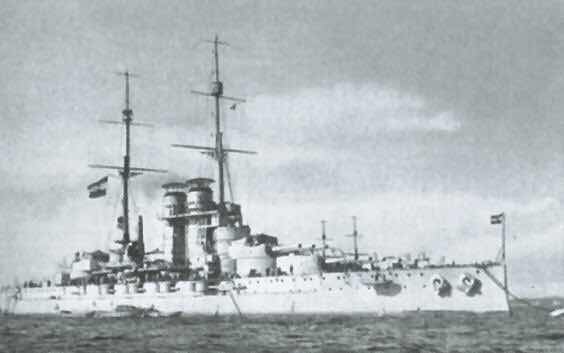
The Loss of SMS Szent István

SMS Szent István
SMS Szent István, Austro-Hungary's newest battleship


By May 1918 the Austro-Hungarian surface fleet was in crisis. Four years of relative inaction had led to severe unrest amongst the crews and on some of the ships they had already risen in open revolt. At the base at Cattaro on the 1st February 1918 the Red flag was raised over the Armoured cruiser SMS Sankt Georg and was joined by other ships including pre-dreadnought Monarch and cruiser Kaiser Karl IV as well as other ships in port whether they agreed with the mutiny or to avoid being shelled by the larger ships. Demands were handed to the shore commander Kontreadmiral Hansa demanding better conditions for sailors, a democratic style government, freedom from Germany and above all Peace. Most of these demands were beyond the ability of Hansa to permit and the Army Garrison commander threatened to bring artillery out to shell the mutineers. The light cruisers SMS Helgoland and Novaro, with a flotilla of loyal torpedo boats, moved out of range of the mutineers then raised the Imperial flag and were joined by U-boats from the German U-boat station but the senior officer Linienschiffskapitän Heyssler aboard Helgoland was loathed to sink very valuable ships and waste lives. On the 3rd February the Third Battle fleet consisting of the Pre-dreadnought’s SMS  Erzherog Karl, Erzherog Franz Ferdinand and Zrinyi arrived and the rebellion rapidly petered out and Hansa and all the officers were freed. Order was restored with the arrest of some 800 mutineers and the execution of four ringleaders including Franz Rasch.

   Elsewhere sailors were sabotaging the war effort with a force of sixty Italian speaking sailors under Fregattenleutnant Veith being captured at Ancona after being betrayed to the Carabinieri by some of their own number before they could sabotage the sugar refinery and MAS (Motoscafi Antisommgibil – Motor Torpedo boats) in the harbour on the night of 5-6 April. Elsewhere Linienschiffeleutnant Nikos Horthy reported his crew refused meals and duties until he personally inspected the vessel and brought charges to the ring leaders.

   As a reaction to these events the Austrian High Command forcibly retired older Admirals and officers or redistributed them to shore commands whilst promoting younger officers, a move that saw a reluctant Horthy promoted to Commander of the Adriatic fleet and a promotion to Kontreadmiral. After taking command another incident occurred with two crewmen of a destroyer that was due to escort a convoy to Albania, plotting to overthrow the officers and defect to the enemy. The plot never gained ground and Horthy signed the orders to execute the two men.
   Horthy believed that there could be only one recourse to quell the mutinies and sedition recording in his memoirs that the:

Best way to restore discipline in the Navy would be to put the ships into action, a view that was shared by our colleagues of the German Navy. The men who had not yet heard a shot fired in anger must be shaken out of their lethargy. (1)

When he was stationed on a cruiser inactive he had observed that:

This particular command gave me no joy. Inactive, we were moored to a buoy, and had to watch cruisers, destroyers, torpedo-boats and U-boats sail away and return, happily engrossed in their heavy duties. Among those who were gay after days, endangering their lives, traitors were not found. (2)

The German Naval mission to the Austro-Hungarian Empire was growing alarmed at the events unfolding at the mouth of the Adriatic as well. Since the attack on the Otranto Barrage the Allies had strengthened their defences with a total of forty Royal Navy destroyers (including six Australians) and twelve French destroyers which operated in patrols of 6-10 vessels day and night whilst the fleet of thirty-five trawlers with hydrophones sat north of the barrage listening for submarines in passage covered by a growing aerial patrol. To the south lay eighteen American wooden submarine chasers whilst mines lay at 60 feet below the surface near Otranto and others were connected to nets that would pull them up into submerged U-boats making the transit a very tricky affair. The German officers were keen to protect the exceptionally valuable U-boats and during April five had been attacked trying to cross the barrage and eight in May with SMS UB-52 being sunk by the British submarine HMS H4. They wanted the Austrians to act in support of the U-boats and after a raid on the barrage by Austrian destroyers in April was successfully repulsed by Allied destroyers without loss, a grander scheme had to be undertaken.

There was also a much bigger issue that was concerning the German Admiralstab and it went far beyond the Adriatic.  With the collapse of the Russian war effort there was a move for Germany and her Allies to take control of the vessels of the Black Sea fleet including powerful dreadnoughts and submarines before linking with the Turkish fleet and heading down the Bospherous and into the Mediterranean seriously affecting the balance of power which may cause to call for reinforcements from the Grand Fleet which would in turn affect the blockade of Germany and the balance of power with the  High Sea’s fleet. Having an active Austro-Hungarian fleet would further spread the Allies’ ships. As it was the Allied Naval council wanted to redistribute the fleets to meet a possible threat from the Black sea with the French dreadnoughts and the Danton class pre-Dreadnoughts to the Aegean and the five Italian dreadnoughts, the pride of their fleet, to be placed under French command at Corfu where they could simultaneously be used to check the Austrians and be in reserve should the new threat materialise. The Allied Council were concerned, however that the Italian force was not large enough to hold the four Tegetthof dreadnoughts and the four pre-dreadnoughts should the Austrians sail en-masse.


The Allies were also far from pleased with the strength of the Barrage estimating that in both April and May it had been breached fifty times by submarines going in or out and that shipping was still being sunk at the same rate as it had the previous year including the troop transport SS Leasowe Castle which was sunk 104 miles WNW of Alexandria carrying 3000 soldiers to Marseille. The troop ship was part of convoy of six troopships escorted by Japanese and British destroyers and was intercepted by SM Ub-51 under the command of Kapitänleutnant Ernst Kraft at 12:25 a.m.. The ship was operating a blackout with some of soldiers sleeping on deck at their action stations but the convoy was well lit by the full moon. The torpedo struck amidships under the funnel on the starboard side. Disaster was avoided with the ship coming to a halt and sinking slowly whilst the troops were paraded and put into lifeboats in an orderly fashion with the IJN destroyer Katsura and the sloop HMS Lily taking soldiers out of the boats and sending them back for more from the stricken vessel. In all only 101 of the ship’s company and troops went down with the ship including her master, Captain E. J. Holt.

The Austrian plan took into account the experiences of the previous year’s attack on the Barrage combining a powerful attack on the light forces that constituted it with overwhelming force combined with supporting vessels to cover the withdrawal who would ensnare any pursuers including, as Horthy was predicting battle-cruisers.
The attack was timed to coincide with General Boroevič's offensive across the Piave river with the main attack would be carried out by the four Tegetthof dreadnoughts working in pairs before withdrawing towards Pola having done enough damage before the Allied Navy responded. The Austro-Hungarian fleet was hoping to ensnare and sink the predicted battle-cruisers and any pursuing Allied vessels in a way that they almost managed the previous year. Twelve Austro-Hungarian U-boats were placed at favourable points through the Adriatic to catch the Allies unawares whilst the three Erzherzog class pre-dreadnoughts were arranged in a line running north to south level with Durazio whilst a rapid reaction force of four Novara class cruisers and eight Tatra class destroyers were assembled at Cattaro ready to respond.  

The Szent István was the newest of the Tegetthof class dreadnoughts, having come into service in 1915. The Tegetthof class were broadly similar to the Nassau class battleships and were considered fairly compact and well armoured and were armed with four turrets housing three 30.5cm guns as the primary weapons, the first battleships to be armed like this. Unlike her sisters, the Szent István had two shafts and propellers but had a top speed of 20 knots with coal soaked in oil to increase its burn rate. The Szent István was also the only Tegetthof to be built at a Hungarian dockyard, by the Ganz and Company’s Danubius yard at Flume in Croatia and was the first major warship built at the yard with the yard itself having to be refitted to carry out the work. The ship was laid down on the 29th January 1912 following the Hungarian government ratifying the 1910 and 1911 Naval budgets, something that the land locked nation was often loathed to do.

   The early life of the Szent István was marked with disaster and complications. On the day that she was launched, 17th January 1914, an anchor chain fell killing a dock worker and injuring another/ The vessel was also the only major warship in the fleet that did not have the Emperor present at the launch as Franz Josef I was ill and Archduke Franz Ferdinand was so anti-Hungarian that he refused to go. After the rocky start the Szent István’s career was somewhat unglamorous with her construction being halted by the start of the First World War with her final completion date being 13th December 1915. Unlike her sisters she never left Pola except for routine gunnery training until she received her orders for the Operation against the Barrage and only fired her anti-aircraft guns in anger as the Italians launched some eighty air raids on the Austro-Hungarian fleet between 1915 and 1917.

   On the 8th June Admiral Horthy lead the 1st Division consisting of the Szent István’s sisters SMS Viribus Unitis and Prinz Eugen out of Pola at dusk and arriving at Slano by dawn and waited for the 2nd Division to get into position. Captain Seitz led SMS Tegetthof and the Szent István out of port on the night of 9th June and after an initial delay caused by Tegetthof suffering engine difficulties and by the defensive boom across the Pola harbour not being retracted, the force of two dreadnoughts and their escorting destroyers and torpedo boats headed through the Dalmatian archipelago for Isoa Grossa where they would wait for the allotted time to begin a coordinated attack on the Barrage.

   The 2nd Division were not the only vessels who were delayed that night. The Italian torpedo boats MAS 15 and MAS 21 were floating off the island of Lutostrak with one of the two suffering its own engine problems at 3:15 a.m. on the morning of 10th June having been dispatched from Ancona by the base commander Calleani for a routine patrol of the Dalmatian coast under the command of Capitino di Corvetta Luigi Rizzo. Lookouts reported heavy smoke coming south and soon the two Austro-Hungarian battleships were sighed. Rizzo made the decision to attack as he could not out run the Austrians and there was a chance that they could do some damage and escape.

Orders were passed and the two MAS slowed their engines so that no white wash would betray their position and they managed to pass between two of the Austrian destroyer escorts and close to the two dreadnoughts at 3:35 a.m. and quickly powered up their engines approaching to 300 yards of the towering Austrian vessels. Capoltimoniere Armando Gori’s MAS 15 targeted the Szent István whilst Guardiamarina di complemento Giuseppe Aonzo’s MAS 21 attacked the Tegetthof both firing two torpedoes. With two torpedoes passing the SMS Tegetthof she immediately took avoiding action and believing that an Allied submarine was in the area began to zig-zag and fired upon phantom periscopes. The two Italian vessels turned for home pursued by the Austrian escorts with the Huszár class destroyer SMS Velebit  being forced to give up the pursuit after a depth charge was dropped by one of the MAS and exploded underneath it!  

The Szent István was not so fortunate and was struck by two torpedoes abreast of her boiler rooms penetrating both boiler rooms with the hole made worse by poor quality riveting.

The Situation aboard was somewhat bleak with severe flooding occurring in the aft boiler rooms and the dreadnought began to list to starboard by 10°. Action was quickly taken with the magazines flooded which reduced the list to 7° whilst collision nets were deployed to try and cover the torpedo holes but to no avail. The decision was made to turn the vessel and aim for nearby Bay of Beguije on the Isle of Molat at low speed but with the unimpaired flooding dousing the fires in the boiler rooms and the loss of electricity the ship’s fate was sealed.


   Following the Tegetthof’s return at 4:45 a.m. she attempted to tow her wounded sister but all attempts were fruitless as was turning the guns to port to redistribute the weight and counter the list as well as jettisoning all of the ready ammunition. Slowly the vessel began to capsize and at 6:05 a.m. on the 10th June she slipped beneath the waves taking 89 sailors with her out of a crew of 1041 with the rest of the Austrian vessels picking up the survivors. Concern spread as to the cause of the sinking and a belief that they had been betrayed rather than poor luck and lack of anti torpedo defences filled the fleet, Admiral Horthy later commented in his Memoirs that the Sinking;


Meant that the enemy could no longer be taken by surprise, for the Italian would have given the alar and we would have to face forces far superior in the neighbourhood of the Otranto Barrage that we had contemplated. With heavy heart, I decided to call of the attack and gave the order for the ships to return to Pola. (3)


For the Austro-Hungarian Navy it had been a last roll of the dice and for the surface fleet it was the end of the war though Szent István was not the last Tegetthoff to be sunk with Viribus Unitis being sunk later that year by Italian frogmen.


SMS Szent István slowly capsizing
For the Allies it was a lucky escape and news of the Austrian vessel’s fate was reported the next day before anyone knew that the four Tegetthofs had left port. Rumours began to circulate that two of the Austro-Hungarian battleships had been sunk and a third heavily damaged which the Naval council did not readily believe but it gave the Allies freedom of movement as it was now felt the Italian fleet now held the balance in the Adriatic allowing the French ships to be ready to deploy against the German threat that may appear from the Black Sea.


End Notes
1 - Horthy, M. "Memoirs" Hutchinson & Co, London, P.89

2 - Ibid. P.88
3 - Ibid p. 90

Tuesday, 17 October 2017

Last stand of HMS Strongbow

Day broke on the 17 October 1917 and HMS Strongbow, an M-class destroyer escorting a convoy consisting of two British, one Belgian and nine neutral Scandinavian vessels from Lerwick to Bergen with the armed trawlers Elise and P. Fannon. Strongbow was at the rear of the convoy whilst her sister HMS Mary Rose under Lt Commander Fox led the convoy from the front, when the crew spotted two cruisers at 06:05 approaching through the early morning haze at two points after beam. Visibility was only 4000 yards and the two vessels were closing at speed. The Duty officer Acting Lieutenant James believed them to be British light cruisers of the Cleopatra class and signalled them for identification using a Morse spot lamps.
There was no response.

The second signal met with no response.

The third was met with a poorly morsed letters that made no sense when translated. Something was not right and James immediately sent for the Captain Lt-Commander Brooke and Strongbow turned to meet the two unknown vessels and increased speed.
HMS Strongbow moves to engage SMS Bremse and Brummer

SMS Bremse and Brummer had been dispatched by Admiral Scheer to seek convoys on the Lerwick to Bergen route and if none were to be found to proceed to the West coast of Britain and range into the Atlantic at their discretion and depending on their fuel supplies.

The Germans reasoned that whilst the rest of their fleet was known to be engaged in the Baltic and capturing Helsingfors that the British would not expect an attack. A successful attack would also cause problems for the enemy and ultimately aid the U-boat campaign as the Royal Navy would need to bleed off vessels searching for U-boats to protect these neutral convoys from surface raiders. The mine-laying cruisers Bremse and Brummer were specifically chosen for their appearance which was similar to British cruisers and that they had a top speed of 34 knots and could use either oil or coal. With their decks cleared of all their mine laying equipment, save for the lowering mechanism, and the births for 450 mines the cruisers left Wilhelmshaven and proceeded into the North sea after a day's delay whilst minesweepers cleared a path for them.

Scheer legitimised attacking neutral ships in his memoirs;

It was known that neutral merchant vessels assembled in convoys to travel under the protection of English warships, and therefore they might be regarded as enemy vessels, since they openly claimed English protection as to benefit the enemy and consequently to injure us.

Room 40, the Admiralty's code breakers, had intercepted Bremse and Brummer reporting their position as north of the Sylt at Lister Tief. This information was passed on to Operations to evaluate as Room 40 had no knowledge of British vessel's dispositions.

The Admiralty Operations room did not believe that two mine laying cruisers would be a threat to anything and that they were probably adding to the formidable minefields already in existence. There had been a belief that the Germans would attempt a raid of some sort and a force of tree cruisers, twenty seven light cruisers and fifty-four destroyers spread itself from the mid North Sea to the coast of Norway looking for a mine layer and force of destroyers.

The Brummer and Bremse had slipped by at night using their high top speed and now were closing on Strongbow and at 3000 yards fired with their first salvo falling short. The second hit the main steam pipe causing the destroyer to stop and the Wireless room removing her ability to call for help. The time was 06:15.

With Mary Rose some way ahead the defenceless merchant ships slowed to a stop and began abandoning ship in the hope that they're crews could be afforded safety in the lifeboats. The two German cruisers closed and began sinking the merchant ships with expertly aimed shots at the waterline and would eventually claim all nine of the neutral Danes, Swedish and Norwegian vessels whilst the Belgian and British vessels fled the scene.

At 06:20 the Mary Rose reappeared reacting to the gunfire and sighting four merchant vessels already sinking and bravely charged the German warships whilst trying to send an SOS transmission. Although acknowledged by a shore station and asked for confirmation SMS Brummer managed to block any further communication. Mary Rose began firing straight away at a range of 6-7000 yards and closed with the enemy at top speed but at 2000 yards Fox ordered the helm hard over and the two German cruisers hit their mark sending all but eight of the crew to their deaths.

With the escorting destroyers dealt with the German cruisers returned to the task of shelling the defenceless merchant vessels. 

The fight was not over as the plucky Elise defied orders and returned to the scene at first trying to rescue survivors from Strongbow and then firing upon the two German vessels and trying to draw them away. When this failed the trawler could do no more than move to a safe distance and wait.

With their work completed Bremse and Brummer withdrew to the South-East without picking up a single survivor. Scheer would later legitimise this by stating that;

As two (actually three) of the steamers had been able to get away in time on noticing the attack, the care of the crews in the boats could be left to them, for our cruisers had to consider their own safety on the long return journey.

The Elise did return and pick up survivors from Strongbow whilst others were picked up by lifeboats
SMS Brummer 
from the lost merchants. Strongbow finally disappeared beneath the waves at 09:30 having been scuttled by her crew following the destruction of all code books. All in all 250 men died in those few hours or from exposure and a further 50 were wounded. The Germans suffered no casualties.

News of the disaster did not reach the British authorities until 15:50 when HMS Marmion, on the return Bergen - Lerwick track, found the ELISE at 13:30 and steamed to send the message to Admiral Brock, officer commanding Shetland and Orkneys. Beatty was told within an hour and hurriedly deployed his cruisers on the off chance of catching the two Germans that night but to no avail.

The Admiralty were criticised for their failings by the Conservative press and questions were asked in Parliament but the only defence offered was that the sea is a large place and occasionally the enemy, using night and fog may slip through the defences and hit a convoy. It was also pointed out that some 4500 vessels had got through safely in the last six months on the same route.

Beatty was livid that he had not been informed the German ships were Bremse and Brummer as he would have changed his whole deployment knowing their capability. Changes to the convoy system were brought in immediately with larger convoys on a less frequent basis with Destroyer commanders ordered to be at constant standby, suspect all unknown vessels as enemy until absolutely certain to the contrary, scatter the convoy when attacked, avoid engaging "Superior forces" and use W/T to call for help "IMMEDIATELY"

Criticism was brought against Fox and Brooke for their "ill advised" actions that day. Although their bravery in engaging the enemy was hailed it was the various enquiries and court-martials opinion that they're first duty was to summon assistance from the cruiser forces. It was later acknowledged that the Strongbow simply did not have the opportunity to contact anyone as her W/T set was knocked out within minutes. Post war it was revealed by the Germans that Mary Rose had also attempted to do the same .

Indeed the German official account post war acknowledge the bravery of the British crews:

The heroic fight put up by the two British destroyers had been in the highest British tradition, but it achieved nothing.

It was a defeat for the Allies but it was learnt from quickly. Beatty took steps to rectify the situation with his fresh orders and the number of vessels in convoy were increased whilst their frequency decreased so that they would be better protected.

For the Germans it was a victory and was celebrated by the Kaiser with the opening of champagne. Two cruisers had caused embarrassment to the Royal Navy for no loss at a time when good news in Germany was distinctly lacking but strategically it achieved nothing.

There were accusations of war crimes post war with the German crews accused of shelling survivors in the water. Newbolt wrote that;

Throughout the attack the Germans displayed a severity which is hard to distinguish from downright cruelty. They gave the neutral masters and crews no chance to lower their boats and get away, but poured their broadsides into them without warning as though they had been armed enemies... In the case of the destroyers the enemy's conduct was even worse; for to their everlasting discredit fire was opened and maintained upon the Strongbow's survivors.

This would later be refuted by the Germans in Krieg in der Nordsee;

Some of Strongbow's crew, who had taken to the lifeboat , and others who had leapt into the water, became additional victims of gunfire, possibly from shots falling short; it stands to reason that there was no intention whatsoever of firing on them. The statement of the British Official history, that defenceless survivors form the Strongbow were deliberately fired on, cannot be refuted strongly enough.

Monday, 29 May 2017

Battle of Texel


On the 17 October 1914 the 7th Half-Flotilla's four S-90 class torpedo ships shipped out of the Ems estuary to carryout mining operations on the Downs or even as far as the Thames Estuary which would cause major disruption to British shipping.


https://blogger.googleusercontent.com/img/b/R29vZ2xl/AVvXsEhLxoKRsRxFhxK8U5zHLgb9FoRRd0uZAp9s7jX82SAha8Xo72pR37MsUy5mWxDaBarEaBNrQyomk0SjSWQkE1FWyLL7XfpB9HXJ3JFh4gul7QOk6bVP-XY4bMgUSX3nuQCeOKgTeQ7jcec/s400/800px-SMS_S_119.jpg
The torpedo boat SMS S-119
   The force was selected for their good speed of 27 knots and that beyond coastal patrol duties they were of little use with only torpedo launchers and three 2" L/40 guns. The design was almost twenty years old and  much lighter in armour and armament than the Royal Navy's destroyers and indeed there were some within the Admiralstab who had written them off as expendable and the crews were all volunteers for this dangerous journey.


   "Expendable" was a thought many miles from the mind of Korvettenkapitän Georg Thiele as the thirty three year old stood on the bridge of his flagship SMS S-119 as it proceeded south along the Dutch coast off Texel. Thiele had been forced to keep close to land by British mines that lay between Lat 51 15'N and 51 41' against Long 1 35' E and 3 0'E.


   The 7th Half-Flotilla had already lost on of her number in the relative safety of the Ems estuary. The S-116 had been torpedoed by Lieutenant-Commander Horton's HMS E9 as it reconnoitered German naval build up on the 6 October killing nine men and her commander Kapitanleutnant Kurt Freiherr von Ziegesar. It was an inauspicious start to the operation but for Thiele, submarines were no longer his concern as a signalman reported smoke on the horizon aft.

   Acting on a report from HMS E8 the British Admiralty had dispatched a small force to reconnoiter the Dutch coast. They were disconcerted by the activity in the German estuary fearing that the Kaiser's warships were going to sweep down the coast and threaten the port of Zeebrugge which the British were using to resupply the British and Belgian armies. At the same time the German army was sweeping westward with all of its might and should a force of German Cruisers attack and destroy or even damage the port facilities at Zeebrugge it would see the German army to continue straight through the Belgians.

   To combat this a several patrols were sent to meet any German vessels with the light Cruiser HMS Undaunted leading the destroyers HMS Loyal, HMS Lance, HMS Legion and HMS Lennox from the First Division of Third Destroyer flotilla arrived off the Dutch coast. Captain Cecil Fox on the Undaunted began to proceed north with the destroyers at 16 knots when at 1:50 p.m. they sighted their quarry. At first the German formation made no move to avoid their British counterparts until they were in visual range when they began to scatter.


   For Fox this small force of German ships had to be dealt with quickly as they may be screening a larger force heading for Zeebrugge. The Undaunted was ahead of her destroyers and orders were rapidly dispatched with each destroyer to attack their opposite number with the Undaunted assisting with the order "General Chase" signaling the start of the battle and a further signal to the Admiralty "Am pursuing four German Destroyers.

   As the Undaunted reached eight thousand yards she opened fire on the S-118 causing the German vessel to take avoiding action which saved her from damage but allowed the Undaunted to get closer. The British Cruiser resumed fire at 5000 yards with the destroyers going in to support.

   HMS Lance and the Lennox tunred to chase the easternmost German ships, the S-115 and S-119 whilst the Legion and the Loyal went for the S-118 and the S-117 with the Undaunted took direct action on the unfortunate S-118 at a range of 2500 yards with the Legion and the Loyal. One of HMS Loyal's lyditte shells struck the German's conning tower blowing in and Kapitänleutnant Erich Bickert away whilst another 6" shell from the Undaunted caused an explosion by her foremost funnel. The German Torpedo boat was reduced to a "sinking condition" with the Legion and the Loyal firing freely and the vessel disappeared at 3:17 p.m.

   Korvettenkapitän Thiele ordered the S-119 and the S-117 to turn back to attack the Undaunted by either launching a torpedo attack or to draw fire from the beleaguered SMS S-118 but as they reached the furthest limits of torpedo range the Undaunted turned sixteen points away with Fox ordering the Legion and the Loyal advance to attack the advancing Germans. Fox had watched the Germans approach with a growing temptation to let them approach and decimate them with his gunfire but he later commented that “common sense prevailed” which might have been tinged with the memory of the loss of the Amphion still fresh in his mind and not willing to risk another of His Majesty’s warships. Thiele appeared to be unwilling to risk his vessels and countered by seemingly abandoning the attack with the S-117 turning sixteen points north whilst Thiele’s flagship turned east with both vessels coming under direct fire from HMS Loyal, HMS Legion and the Undaunted.

   The Legion pursued the fleeing SMS S-117 and entered a duel which saw the German vessel turn to fire off three torpedoes at her pursuer. Lieutenant-Commander Claud Allsup ordered avoiding action with the first torpedo passing a few yards past her bow and the second a few yards astern but the third torpedo sailed below the destroyer amidships just below her funnel. Thankfully for Allsup and his crew it failed to go off. With her torpedoes spent the S-117 resumed her escape attempt and fired her guns continually at her pursuer as well as trying to rake the decks of the Legion with machine gun fire but to no avail. The British Lyditte shells were much more effective and knocked out the German’s steering gear forcing her to likewise turn in a circle and leaving her deck covered in twisted metal with steam escaping from her many holes. Kapitänleutnant Sohnke’s men fought on until the last gun fell silent and then abandoned ship taking their chances in the cold North Sea than on the sinking wreck which finally slipped below the waves at 3:30 p.m.


   HMS Loyal gave chase to Thiele’s flagship with the excitement clearly getting to Lieutenant-Commander Burgess Watson’s men who began firing wildly at 3,500 yards before steadying their fire with five well executed salvoes that were thought to have calmed the men and “disturbed the quarry”.
   Thiele and the S-119’s Captain, Oberleutnant zur See Windel executed another daring move to try and put off their pursuers by turning eight points towards the Loyal so as to pass astern of her and to put a few shells into her. Watson refused to change course and later reported that;
I decided to steer a steady course and give the after gun a chance of knocker her out; however the spotting was very and. Shot after shot was going over. I sent a Sub-lieutenant aft to with a more or less curt message that they must get a shot short. The Sub-lieutenant soon returned looking rather startled with the information that the First Lieutenant and two men were knocked out. (Naval review p.141) 

   One of the wounded men was Lieutenant Commander G. L. Davidson who remained at his post after his left foot was shot off encouraging his gun crew to continue their efforts and giving orders whilst spotting for the gunners and reporting where the shot fell, a feat that earned him the DSC.
 SMS S-119 soon became a target for both the Loyal, who had altered course to bring her other guns to bear but also the Lance who had left the Lennox to deal with the S-115 alone. The Lance put three shots into the German vessel in quick succession but was struck amidships by the S-119’s last torpedo but it failed to explode. Thiele, Windel and S-119 slipped beneath the waves at 3:35 p.m. but not before a metal case that had been chained shut was jettisoned overboard containing the naval code books.


  In the meantime HMS Lennox had begun firing her forward turret at SMS S-115 at 2:25 p.m. but was inaccurate for some thirty five minutes and it wasn't until 3:10 p.m. that any damage was registered when two Lyditte shells disabled the steering gear forcing the German vessel to turn sixteen points to port. It was at this point that the Lance departed to assist in combatting the S-119. Starting at 2500 yards the Lennox began to demolish the stricken German vessel destroying the bridge at 1,200 yards. It was not until the destroyer reached 700 yards that fire was ceased believing the Germans would strike their colours and surrender but the crew continued to fire prompting the Lennox to resume her devastation until all signs of resistance ceased and a boarding party was dispatched with the officer later reporting that;

   On conclusion of the action I was sent away in a boat to S-115 to take off the only man left alive on board. He was standing on the propeller guard waving his shirt as a signal of distress and on my coming alongside he jumped into the boat and shook me warmly by the hand, pouring down blessings on my head in guttural Hun language.
He continued his report on the damage caused by the Lennox's fire;
I had been ordered to waste no time in taking off the German, so really was not able to make a thorough inspection of her; perhaps I was also thinking a little of our own safety, in that at any moment she might have been expected to blow up, as she was burning fiercely between decks.
   Her hull was riddled with shot holes all along the water-line the starboard side; and aft, she had two large gaping holes either side of the stern post. Nothing could be seen inside these latter but twisted lumps of metal and burning woodwork.
   The funnels, although rather badly knocked about, were still standing, but were more in the shape of a bashed in top-hat than anything else.
   The foremost torpedo tube and the foremost starboard gun had completely disappeared, only gaping holes showing the havoc wrought by our Lyditte.
   Both masts had also gone over the side, this, unfortunately, frustrating any chance there might have been of securing her ensign as a much to be valued trophy.
   The ‘midship torpedo tube was practically untouched, only the lip being a little bent and the torpedo was still in the tube. The after gun also remained standing, but a shell had evidently struck the muzzle, as about half the barrel had been blown away. The after torpedo tube hadn’t been fired and was very little damaged.
   It seemed evident that the officers and crew had jumped overboard soon after the ship had really began to get knocked about; but I should think that they must have nearly exhausted their ammunition first. I am sure that had there been anything left in the magazines the ship would have blown up, considering the heavy fire that was raging fore and aft.
   Owing to the short time I was alongside, I was unable to see what damage had been done to the engines and boilers, or to the foremost port gun; but as regards the former, they were probably reduced to scrap iron, judging from what I could see through holes in the ship’s side.
   Having collected a few empty 4-pounder cartridge cases as “souvenirs,” I pulled back to the ship with our one prisoner. We picked up four other survivors later from the water, one of whom died on the way home from the effects of a bad leg wound
. (Naval review p142-3)

   SMS-115 was finally sunk by the Undaunted signalling the end of the German squadron in an action which had claimed some two hundred sailors killed including all four vessel's captains and the flotilla leader with only thirty one men pulled from the water as prisoners and a further two sailors being pulled from the water by neutral shipping. During the engagement Alfred Fright, who was serving on the bridge of the Undaunted witnessed one of the German vessels hoist a white flag before firing upon lifeboats that were lowered by one of the destroyers. The First Officer, Lt-Commander Wood asked if he should lower the boats to which Fox retorted that "If you do I'll shoot you." It was rumoured that Fox had sworn that he would kill an equal amount of the enemy as had perished under him aboard the Amphion. Needless to say the Undaunted picked up no survivors.  

For the Admiralstab it was a stinging but expected defeat and the loss of the four older vessels only cemented their belief that the Royal Navy destroyers had superiority of numbers and ability over their German counterparts and further such missions were abandoned.

   The Royal Navy could not afford to be self-congratulatory though as despite the easy victory and only five wounded casualties the accuracy of the gunnery was exceptionally questionable with a total of 1031 shells being fired by the five vessels and HMS Lance firing 262 alone. Fox attributed the high amount of shells to the action taking place at high speed and long range and in an article written for the Naval review he made several observations which would have been dutifully brought forward to the Admiralty's attention including noting that independent fire at a range of over 2000 yards with officers spotting was wasteful and inaccurate preferring controlled fire using salvoes with bursts of rapid fire would be the best method until range finders could be employed.
   The Germans on the other hand had also failed to score any significant hits whether due to poor accuracy or just not being able to get rounds in the air due to the enemy fire. The damage was minimal with the Legion being struck in the starboard condenser, the Loyal took two shells including the one that struck the aft gun with the second causing a small fire in the steering compartment and had to undergo minor repair on return to Harwich and her wounded were taken off. The Lance  was raked with Maxim machine gun fire but the damage was superficial and the Lennox and the Undaunted suffered no damage at all.

   With concern that U-boats may be in the area Fox decided to leave the area as quickly as possible and with a brief signal to the Admiralty enforming them that the German force had been sunk his ships turned for home.

   The silence left by Thiele's force passing led to the Admiralstab accepting the worse and a hospital ship was dispatched to look for survivors. The SS Ophelia  was a 1153 ton liner formerly owned by the Hamburg-London line which had been pressed into service as a hospital ship. All was not as it seemed and the Ophelia's behaviour attracted the attention of the Royal Navy as she communicated with the German Naval Wireless station at Norddeich and then she broke the Hague convention by communicating in coded wireless messages. The Admiralty consulted their list of hospital ships which they had exchanged with the German government on the commencement of the war and found the Ophelia was not on the list. HMS D8 was sent to follow the liner but when the submarine was spotted the German ship fled at speed adding to the belief that she was being used as a thinly veiled scout and the decision was taken to board and inspect the vessel which was allowed by the convention.

   HMS Meteor intercepted the vessel and began an inspection. At first all seemed to be in order but there was a curious amount of Verey lights discovered onboard including 600 green, 480 red and 140 white compared to the British who carried no more than twelve of each. The actions of her Captain, Dr Pfeiffer condemned the vessel further as he was spotted throwing code books and documents overboard. The Ophelia was seized as the destruction of her Wireless set and code books officially cast doubt on her status and the decision was upheld in the Prize Courts the following year. The Germans accused the British of piracy with Scheer writing post war that;


https://blogger.googleusercontent.com/img/b/R29vZ2xl/AVvXsEipkj0OZcgbmjt-0LmxWesqfiDpyDvJW5wlCCaidvSeZquGXBJSsE_Kb1fb0H7OkQVzjY83J4VILdc3oM6VCcKzbhPKl9Bgv1VsY5lAqNgL_4-Hup78URg8-5FyRN2q-1co59rC1pH0AHQ/s1600/thARNJ3862.jpg
SMS Ophelia
The English captured her and made her prize, charging us with having sent her out for scouting purposes, although she was obviously fitted up as a hospital ship and bore all the requisite markings.  (Scheer, R.  Germany's High Sea's Fleet in the World War, Kindle, loc 1101)


  The final chapter of the Texel episode came almost two months after the battle on 30 November when a British trawler snagged and retrieved a lead lined box on the sea bottom. On inspection it was found to be the chest jettisoned from SMS S-119 which contained the Naval Verkehrsbuch codes which were for cable communications between Naval attaches, foreign based ships and Admirals at sea adding to the books already taken from the Magdeburg and the Hobart handing Room 40 a massive advantage in deciphering German naval codes and anticipating their moves.