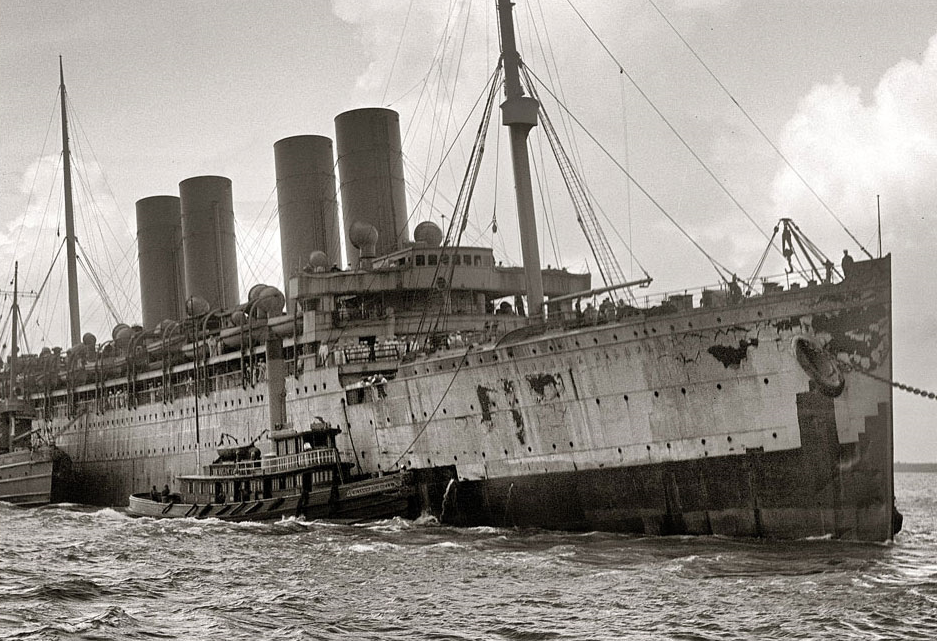
SMS Königsberg,
the Nürnberg’s older sister and lead
ship of her class was to have a pretty audacious career somewhat devoid of
combat success but one that kept the Royal Navy busy in trying to destroy her.
It was also a career that saw all but a handful of her crew die abroad in Africa.
SMS Königsberg,
the Nürnberg’s older sister and lead
ship of her class was to have a pretty audacious career somewhat devoid of
combat success but one that kept the Royal Navy busy in trying to destroy her.
It was also a career that saw all but a handful of her crew die abroad in Africa.The Königsberg’s deployment to the Schütztruppe started on the 1st April with the arrival of Fregattenkapitän Max Loof who began to take stock of his crew and vessel which took until the 24th April. Königsberg moved from Kiel to Williamshaven and finally departed Germany on the 28th. It was supposed to be a two year deployment to Dar Es Salaam, a nice easy deployment to fly the flag and provide diplomatic pressure should it be needed. The Admiralstab knew well that should war come a light cruiser on the coast of Africa would provide a major distraction for the Royal Navy and could cause havoc for merchant ships around the Red Sea and provide a barrier for any troop transports from Australasia.
After a leisurely cruise through the Mediterranean via Spain and Italy she traveled through the Suez Canal finally arriving at her new assignment on the 5th June taking over from the Bussard cruiser Geier which had departed for Tsingtaō. Königsberg‘s crew began a training schedule whilst the officers poured over charts of the area and the vessel was assigned to survey the harbour of Bagamoyo. The situation in Europe though led Loof to abandon his training schedule and begin preparing his forces for war with Britain. On his return to Dar Es Salaam Loof began to organise a coast watching force to tell him if the Royal Navy were sailing north from the cape and keep a track of German shipping. In port he had the survey ship Möwe the sister of Planet which was of limited value militarily. There were no vessels suitable for conversion into auxiliaries either. Königsberg would have to stand alone should war come and according to a signal from Berlin on the 27th July warning him that war was imminent. Loof decided it was time to put to sea so that he wouldn't be caught in harbour.
Admiral King-Hall of the Cape Squadron was tasked with patrolling the whole of the South African station of St Helena to the Red sea with a squadron of aging cruisers, HMS Hyacinth, Pegasus and Astraea all of which were only saved from the wrecker’s yard by the fact that there was nothing to replace them until 1915. King-Hall knew that there would be no vessels available to assist him should Königsberg escape as Jerram was busy trying to contain the East Asiatic Squadron and Patey's squadron would be busy tackling German colonies, protecting the South Seas from von Spee and providing escort to the inevitable troop convoys. The Indian squadron was just as stretched having to police from Singapore to the Red sea. The only hope was that vessels could be released from the Mediterranean or home waters to assist him but with the pursuit of the Goeben and Breslau as well as the containment of the Austrian fleet it looked severely unlikely. He had to act quickly.
On the 28th July as Königsberg and Möewe practiced gunnery and torpedo runs but with news that the King-Hall’s squadron had come north to Zanzibar and were busy coaling was a concerning turn of events. Loof ordered his ship to sea on the 31st in the early hours in the morning but as they left Dar es Salaam the British squadron moved to escort positions.
King-Hall had been waiting for Königsberg to move and although war between the two nations had not been formerly declared and at that point there was no concrete belief in England that it would do, King-Hall was not prepared to take the chance. The Admiralty believed that Königsberg would quit the theatre and try to head for the Mediterranean whilst the Suez Canal was still open to her. Having commenced resupply in Zanzibar on the 29th July King-Hall had been relying on the British Consul in Dar es Salaam and on the 31st he was given the signal that Königsberg had left at 4.30. Scrambling his vessels out of the harbour as quickly as he could paid quick dividends as at 6.30 Hyacinth spotted their prey. His vessels would shadow Königsberg and the moment war was declared offer Loof a fait accompli. Loof watched the cruisers with concern. True they were obsolete and their weapons now where near as comparable to his they did outgun him. In a fire fight the shear volume of falling shells would destroy his ship. There was little he could do but run. Loof ordered his engineers “full steam” and after forty five minutes he received the signal that the boilers were at full team pressure and the Königsberg began to pull away leaving King-Hall’s squadron in his wake but it took the coming dusk that evening and a rain squall to finally lose their British pursuers.
Following the escape of Königsberg King-Hall had to settle for next best thing and ordered Astraea sailed into Dar-es-Salaam on the 8th August and commenced firing on vessels in the harbour and destroyed the W/T station. The Germans panicked and Möwe was scuttled as was the floating dock which was the only part of the port capable of housing Königsberg. Loof’s only safe haven, source of coal and parts for repair had been robbed from him in one swift bombardment if he was to stay active he would need to catch as many merchant vessels as he could and use their coal or rely on the Somali who carried 1200 tons or the Reichenfels in Colombo who could bring him 6000 tons. His vessel could only carry 850 tons which gave him a range of 6000 miles at 12 knots.
Königsberg began her cruiser campaign well with her first sighting on the 6th August. It was the liner Zieten carrying German servicemen to East Africa including a hundred officers and men from the SMS Planet followed quickly by a British built vessel which refused to stop. Königsberg gave chase and fired across her bow. The ship was the German Goldenfels bound for Hamburg. That night a third vessel, SS City of Winchester under the Scottish Captain George Boyck was forcibly stopped illuminated with spot lights and signalled;
“What ship and Nationality?”
Boyck and his crew were seriously taken aback when a German oarding party came aboard under Leutnant Koch who ordered the W/T set destroyed and all charts and papers gathered up.
Königsberg gathered up the German vessels in the area and proceeded by a circuitous route to Hallaniya island where she coaled from Goldenfels. Between 11th-12th August City of Winchester’s 400 tons of coal and supplies of food, water and a portion of the cargo of tea was brought aboard before the British ship had her seacocks opened and a couple of shells put into her for good measure. Goldenfels took the prisoners to Cape town.
The Admiralty knew where the raider was and so began patrols whilst ordering merchant ships to halt which upset the London markets as the tea harvest was just beginning and suddenly none could be delivered!
Coal was running short and with the threat of British ships in the area Loof would need every lump he could get. Rough weather kept his planned rendezvous with the Somali had to be delayed and when they finally did meet he only had 200 tons left in his bunkers. The cruise in the Gulf of Aden was somewhat disappointing as in six days they had caught one British ship.
Whilst awaiting Somali off Ras Hafun in Somaliland the pressing need for drinking water led Koch to investigate the shoreline but the shore party were attacked by mounted tribesmen and forced back to the safety of he cruiser. If Somali did not arrive soon Loof knew that the Konigsberg's career would be over and he would be forced to scuttle her. Somali arrived two days later with 700 tons of precious coal and news that the Reichenfells had been impounded in Colombo and would not be able to assist Königsberg. Loof decided to take the warship south to Madagascar believing the British would be sweeping the Gulf of Aden but after the long cruise south they found no French ships at Majunga and a Red Cross flag fluttering from the W/T mast. Bitterly disappointed the Königsberg turned north to meet with Somali at a secluded atoll where they attempted to coal but the swell required them to find a more secluded place to hide, Kapitän Herm of Somali suggested the Rufiji river delta.
The delta was remote with a small number of fishing
villages scattered about in the midst of the mangrove swamps and jungle. They
snuck up the river using the steam launch to sound the depths and halted 8
miles upstream at Salale. The local District officer Dankers was advised of
their arrival and he sent a messenger who sent a messenger to summon up another
District officer, Hauser and Doctor Fraenkel bringing news from the front and
fruit which was gladly received by the crew. Coal was organised to be brought
from Dar es Salaam and Tanga by coastal and river dhows as well as the Rovuma and from the hiding Präsident via tugboat. More news arrived
that a lone British cruiser lay coaling in Zanzibar.
On the 19th September they weighed anchor
with Herm acting as pilot acting "Mit Gött fur Kaiser und Reich"
began their operation. At 4.00 on the following day the gunners were brought to
action stations and the guns loaded and cruised past Chumbe island at 7 knots.
The Hellmuth, a German tug which had been seized by the Royal Navy on the 4th August as the German business men on the island loaded her up for an escape to Dar Es Salaam, was patrolling outside the channel under Lieutenant Charlewood. At just after 5.00 Charlewood spotted a shadow approaching which on closer inspection was the Königsberg. The German's first shell convinced the crew to abandon ship, the third passed through the boiler killing the last remaining crewman. Pegasus had been in port having her boilers overhauled and the night before the Engine chiefs had prepped them to light for leaving. The crew shot to action stations she they heard the shells that killed Hellmuth and then alerted when Leutnant Apel's first salvo roared over. The second one struck home whilst the third cut down gunners hurrying to their positions. When Pegasus did return fire the shots fell woefully short of the 9000 yards needed to strike Königsberg. The German's fire was accurate and unrelenting striking the bridge, destroying the range finding equipment and one of the starboard gun emplacement wiping out the gunners who were trying to aim through open sights. The decks became a charnel house of dead and wounded gunners caught in explosions or mowed down by splinters all within eight minutes. As fires broke out the guns fell silent. Damage control teams tried to slow the flooding below decks. The stokers were ordered to raise steam but it took three quartets of an hour to build up pressure and by then Pegasus's fate had been sealed. As Königsberg closed to 7000 yards Captain Ingles ordered the unthinkable and the colours were struck and the German cruiser ceased fire after twenty minutes of fire briefly to ascertain whether the colours were down but when it couldn't be confirmed Loof gave Pegasus another fifteen minutes but stopped again at 5.50.
The Eastern Telegraph office signalled King-Hall advising him of Pegasus's fate and updated
numbers of
casualties and wounded. Meanwhile the Königsberg
had left port having fired 276 shells and jettisoning casings and barrels
to look like sea mines.
Pegasus burned in the harbour whilst the wounded were taken into the French hospital where their wounds were treated The British attempted to beach the Pegasus using the coaster Kilwa but the damage was too extensive and the ship just rolled over and sank with all of her munitions in a mere thirty feet of water. With the port facility of Zanzibar now defenceless the local traders began to panic moving all the flammable goods away and the surviving sailors mobilised as a temporary garrison but not before the dead were laid to rest on Grave island. The total loss, including those who died from their wounds over the following day came to fifty six wounded and thirty eight dead including the ship's First Officer Richard Turner who had his leg blasted away and bled to death on the deck urging his men on against the odds before requesting a brandy and cigarette from the ship's surgeon. Another act of bravery and selflessness was the Marine who hoisted up the ships colours and flew the Cross of St George from the ship's bow amongst the storm of shells and death. The loss of Pegasus shocked the admiralty in London and Captain Drury-Lowe’s HMS Chatham was dispatched from the Red Sea to seek and destroy Königsberg at any cost.
The Hellmuth, a German tug which had been seized by the Royal Navy on the 4th August as the German business men on the island loaded her up for an escape to Dar Es Salaam, was patrolling outside the channel under Lieutenant Charlewood. At just after 5.00 Charlewood spotted a shadow approaching which on closer inspection was the Königsberg. The German's first shell convinced the crew to abandon ship, the third passed through the boiler killing the last remaining crewman. Pegasus had been in port having her boilers overhauled and the night before the Engine chiefs had prepped them to light for leaving. The crew shot to action stations she they heard the shells that killed Hellmuth and then alerted when Leutnant Apel's first salvo roared over. The second one struck home whilst the third cut down gunners hurrying to their positions. When Pegasus did return fire the shots fell woefully short of the 9000 yards needed to strike Königsberg. The German's fire was accurate and unrelenting striking the bridge, destroying the range finding equipment and one of the starboard gun emplacement wiping out the gunners who were trying to aim through open sights. The decks became a charnel house of dead and wounded gunners caught in explosions or mowed down by splinters all within eight minutes. As fires broke out the guns fell silent. Damage control teams tried to slow the flooding below decks. The stokers were ordered to raise steam but it took three quartets of an hour to build up pressure and by then Pegasus's fate had been sealed. As Königsberg closed to 7000 yards Captain Ingles ordered the unthinkable and the colours were struck and the German cruiser ceased fire after twenty minutes of fire briefly to ascertain whether the colours were down but when it couldn't be confirmed Loof gave Pegasus another fifteen minutes but stopped again at 5.50.
The Eastern Telegraph office signalled King-Hall advising him of Pegasus's fate and updated
 |
| The Marine holding up the standard on Pegasus |
Pegasus burned in the harbour whilst the wounded were taken into the French hospital where their wounds were treated The British attempted to beach the Pegasus using the coaster Kilwa but the damage was too extensive and the ship just rolled over and sank with all of her munitions in a mere thirty feet of water. With the port facility of Zanzibar now defenceless the local traders began to panic moving all the flammable goods away and the surviving sailors mobilised as a temporary garrison but not before the dead were laid to rest on Grave island. The total loss, including those who died from their wounds over the following day came to fifty six wounded and thirty eight dead including the ship's First Officer Richard Turner who had his leg blasted away and bled to death on the deck urging his men on against the odds before requesting a brandy and cigarette from the ship's surgeon. Another act of bravery and selflessness was the Marine who hoisted up the ships colours and flew the Cross of St George from the ship's bow amongst the storm of shells and death. The loss of Pegasus shocked the admiralty in London and Captain Drury-Lowe’s HMS Chatham was dispatched from the Red Sea to seek and destroy Königsberg at any cost.
The Königsberg
sailed away victoriously with morale peaking when the ship quickly slowed to
just above stop as the Chief engineer reported that one of the piston rods
crosshead had split and she was losing steam. With regret they informed Loof
that thy could not repair it at sea and the disappointed Kapitän had to make a painful decision, they would have to return
to the river delta and abandon the plan to commerce raid their way back to
Germany. On arrival at Salale the engine parts were disassembled and taken by
farmers cart to the railway hub before forwarding them on to Dar Es Salaam
engineering works a process that would take six weeks.
Loof ordered the creation of an observation post network in tall trees and on the heights of Pemba hill and placed under command of the Naval officer present, Schoenfeld. The crew cut down the mast heads to make her harder to spot and camouflaged the ship with palms and mangroves whilst an army of natives cut down swathes of the mangroves to provide fuel for the Königsberg and her engine trials.
The Chatham’s journey down the coast was watched by German signallers who were lighting fires and waving flags to pass on the information and there was no doubt that Königsberg would know that the British were coming and soon Dartmouth and Weymouth joined Drury-Lowe to search the coast but overlooked the Rufiji. The three British ships divided the coastline into sectors that each patrolled. However this sort of search was very intensive on coal and the British soon used up all of their coal and their supplies in Mombassa and Zanzibar ad soon colliers had to be summoned from other parts of the globe which curtailed operations for a time. Dartmouth caught the tug Adjutant whose log book showed that she had been to Salale but the British dismissed this as impossible as the Rufiji was considered unnavigable. The log did however say that it had travelled from Lindi so Chatham sent her steam pinnace up the river and discovered the Präesident camouflaged and painted white with the Red Cross flag and the German district officials claimed that she was a hospital ship and therefore not a combatant. The British refused to believe this and forced the issue and the vessel had her machinery disabled. On inspecting the vessel they found a reference to coal being shipped to Salale. Something did not add up and was going on up the river.
There was another rumour of Königsberg hiding in Dar es Salaam and Chatham moved to search the port discovering the Feldmarschall, König and Tabora in dock. After firing a few rounds the German harbour master and a representative of the Governor’s office went out by launch to request a ceasefire. They claimed that the port was neutral and not at war with England. Drury-Lowe ordered a full inspection to make sure the vessels were not auxiliaries and ordered all W/T equipment destroyed.
Finally the Chatham moved down to investigate the Rufiji and landed men to search the area. It was to one of these shore parties that a group of natives revealed that Königsberg was indeed hiding further up river and Chatham moved tentatively up the river. Her lookouts staring for the Königsberg. To their relief the German vessel that had so elusive was sighted and Chatham opened fire sending up showers of hot mud but causing no damage. Loof simply sent his men below decks and simply moved the ship up stream. Dartmouth and Weymouth were summoned and on 2nd November the flotilla sailed up stream and tried again but the Germans were just out of range.
The Admiralty’s order on the 2nd November was crystal clear; “Destruction or capture of Königsberg is a matter of highest importance.” Drury Lowe decided that the best course of action was to put a block ship into the deepest channel to stop Königsberg from escaping. With a flotilla of cutters and under the guns of the old battleship Goliath the task force moved into position on the 7th November. The shore batteries established by Schoenfeld opened fire on them as they advanced which slowed them down. The Chatham was able to fire and strike the Somali setting the collier on fire and be wrecked. Königsberg withdrew a further five miles which led to her getting stranded on the sandbanks and silt which came with its own problems with movement being restricted on the vessel to stop toppling, silt getting into everything and requiring engineers to strip and clean everything time and time again.
On the 9th November Drury-Lowe ordered another attempt to sink his block ship, Newbridge, into the
Ssimba Uranga channel. Newbridge was
under the command of Commander Fitzmaurice with volunteers from Chatham and Pegasus and fitted with rudimental armour in the form of sandbags.
The dynamite charges blasted a hole in the Newbridge
sinking in the channel whilst under heavy fire from the shoreline at 6.15 in
the morning. The operation, supported by Weymouth
and Chatham barraging the shoreline
resulted in two killed and nine wounded British sailors and a blocked channel.
Drury-Lowe reported that “Königsberg was
imprisoned and unable to do any more harm.”
With Königsberg holed up the British returned to Dar es Salaam on the 28th November to take care of König, Feldmarschall and Tabora and a boarding party form Goliath investigated the claims that Tabora was a hospital ship. Separate teams went aboard the other two vessels to disable machinery completely so they could not put to sea however the German garrison were not willing to let the British just waltz in and disable their ships in their harbour and soon rifle fire rang out from the shores at the boats in the harbour mouth. Goliath fired her 12” guns and flattened the Governor’s residence and the citizens began to flee for safety. After the withdrawal of the British ships the Germans tried to sink the König as a second block ship but failed to get it in the right place so on the 30th the Goliath and Fox returned and bombarded the seafront.
Drury-Lowe decided that if his vessels could not go in to get Königsberg then they could keep an eye them using aeroplanes or even try to sink her with bombs and King-Hall agreed. Two Curtiss F Hydroplanes were leased with their pilot Dennis Cutler for £150s a month and an insurance loss of £2000s. Cutler was given a rank of flight sub lieutenant in the RNVR and taken to Niororo Island twenty miles from the river delta. The first flight took place on the 19th November but cloud cover meant the aircraft got lost and had to put down and drift for six hours awaiting pickup from Chatham. The next flight on the 22nd November was more successful and they reported seeing the Königsberg in good condition and approximately ten miles inland which was confirmed on the second flight with the Captain of the supply ship Kingfauns castle to validate Cutler’s claim but also confirmed the belief that there were other navigable channals that Königsberg could escape down. King-Hall refused anymore blocking operations and on the 10th December Cutler was captured when his aircraft made a forced landing.
The Königsberg was moved upstream into the Kikunja branch where she was grounded on a sandbank and after offloading equipment and ammo refloated and taken a further seven miles up stream where she was secured through monsoon season. The Germans also modified one of their main guns to work as an anti-aircraft gun firing shrapnel up at the British aerial invaders. Loof’s big problem was supply, a problem shared by Lettow-Vorbeck with equipment being scavenged from the enemy. The German High command were able to dispatch one vessel, the ex British SS Rubens under the Danish flag and name Kronborg carrying 1600 rifles, 1000 4.1” shells for the Königsberg, two million rounds of small arms ammunition, medical supplies, letters from home and coal for Königsberg. After leaving Hamburg on 19th February, running the British blockade and rounding the Cape of Good Hope Captain Christensen was imprudent with his W/T transmissions sending out calls for Loof as he passed Madagascar. As the vessel arrived near Tanga on 14th April a warship did approach but it was HMS Hyacinth with a couple of armed whalers. Hyacinth opened fire striking the upper superstructure. In an attempt to salvage what cargo he could Christensen flooded the hold and set fire to the timber on deck which had been their “cargo” in the hope that playing dead would discourage further attack Admiral King-Hall attempted to salvage the wreck but abandoned attempts and proceeded to shell Tanga. London vetoed a return to Kronborg in case of mines or German ambush which gifted the Germans their supplies. As much as could be salvaged was taken ashore and every round taken apart cleaned and put into supply.
Despite the gains for the Askaris Loof had to abandon his escape plan without coal Königsberg would not get far. He knew there was no hope of securing more and there was now a finality to the British blockade. On addressing the crew of this the morale plummeted as their temporary refuge had become a tomb. The siege had grown so demoralising with no contact with the outside world, an ever increasing numbers of new cases of malaria, black water fever, dysentery, malnutrition and want of medical supplies and the cruisers meagre medical facilities were soon overwhelmed. The heat and humidity below decks meant the men slept on the relative cool of the decks where they were at the mercy of the insects. A somewhat luckier detachment of one hundred men were taken to assist in the battles on lake Tanganyika and to form the Königsbergabtielung the nucleus of the Dar es Salaam defence force whilst Loof kept the rest of the crew busy with painting and as many maintenance duties as possible to keep morale up. As long as his vessel and defences were in existence the Royal Navy had to concentrate forces here rather than somewhere more vital like Dardanelles.
The siege of the hidden Königsberg and the inaccessibility of the river delta led to the Admiralty to revisit the aircraft as an untried weapon of war. On the 7th January 1915 the No. 4 Royal Navy Expeditionary Force was formed under the command of Flight Lieutenant John Cull with Flight Lieutenant Harold Watkins as his second. Both pilots had only learned to fly the year before but the untried crews and aircraft, which were only completed the same week at Kingston on Thames, were quickly loaded upon SS Persia at Tilbury and dispatched for Bombay on the 16th January. On arrival the Sopwith type 807 Seaplanes were put back together and tested by their pilots causing a panic when the locals believed the Germans were attacking as they had at Madras the year before and crowds rushed to the railway stations to evacuate. Watkins also crashed his aircraft serial number 921 on landing. Even still they were again transported to Niororo Island arriving on the 20th February with their first mission chalked up for the following day. Cull climbed into the cockpit of 920 with his observer whilst the mechanics finished their duties checking the engine, fuelling up and fitting the bombs. Cull’s orders were to fly over the delta and locate the German cruiser and bomb it but the aircraft never reached the air. After four days of tinkering Cull tried to again but this time he could not get the aircraft above 1500 feet!
It was a disappointing start to the campaign and King-Hall himself became involved when he brought experts from Zanzibar to look at the engines. The complex system was quite perplexing but they suggested the best way to get the birds into the air was by mixing the Pratt’s aviation fluid with 10% local petrol . This however did very little to improve the situation and instead it made the aircraft’s handling a little worse. The nearest Royal Navy store facility in Egypt were contacted for advise but the lack knowledge of the aircraft or its handling capabilities led to a lot of strange suggestions that ultimately culminated in the bizarre instruction to just chop a bit of each propeller blade to increase the RPM or maybe the aircraft was just overloaded. This was not the end of the farcical campaign that was unfolding for the RNAS as Watkins’ repaired 921 crashed following an engine failure and was written off and on the 28th February 920 had to be rescued by one of the tenders as she began to
sink and had to be rebuilt
using parts from the wrecked 921. Fully repaired again Cull’s aircraft
developed yet another problem when the heat and humidity finally took its toll
on the floats as they buckled and began to flood. The sunburnt mechanics
managed to do some field repairs and modifications fix the floats but it was
all for nothing as the a frustrated King-Hall suspended all flights of the
Sopwith and signalled London that he wanted better aircraft sent immediately
and was reassured three were already on their way.
The new aircraft, three pre-war (1913) Short folder Type 87 seaplanes that were considered useless by other squadrons and all that was available, arrived and taken to the recently liberated Mafia Island only 15 miles from Königsberg’s refuge.
Meanwhile Lieutenant Phillip Pretorius RNVR, a former Major and local landowner who knew the area well was tasked with providing information on tides, depth and plot the position of Königsberg in the Kikonji Channel. He took a dugout canoe and with local assistance was able to chart the delta over the course of a month and even managed to sneak aboard Königsberg. His work earned him a DSO from a grateful Admiralty who had resigned itself to having to send vessels in to get the German after the 12” guns of the aging battle ship Goliath failed to find the range.
The Admiralty had bought three shallow draft monitors from Vickers that had been destined for Brazil and pressed them into service for coastal bombardment duties off Belgium. On the 19th April HMS Severn and Mersey were ordered to be brought from Malta to Mafia Island under tow with the Collier Kendal Castle bringing vital 6000 tons of coal and the Liner Trent bringing supplies and providing accommodation. The convoy left Valetta on the 28th April and after a long complicated journey which almost saw Mersey wrecked and two men die from heat exhaustion it arrived on the 3rd June.
The new seaplanes had arrived on 23rd April and were airborne the following day but it was discovered rust had got to aircraft 121’s fuel tank. The first reconnaissance flight by 122 on the 25th resulted in good but slightly blurry pictures and a crashed aircraft brought down by rifle fire and a bullet into the engine. Both aircraft were repaired and back in action keeping an eye on the German cruiser and changes to the defence network. For the Germans on the ground they were a daily pest but not one they were powerless to stop, Askaris led by German officers were seen forming firing lines with great accuracy as Atkins found to his discomfort on the 5th May when his rudder was struck off. The resulting water landing saw the 119 sinking and the Lieutenant and his observer being picked up by Cull in 122. By mid June the craft were suffering from extreme wear and tear with rubber pipes rotting, propellers falling off due to poor glue adhesion, very few spare parts and poor performance. With no other recourse the two remaining aircraft were simply abandoned on the beaches that June.
Squadron commander Robert Gordon with two Caudron G IIIs, two Farman F. 27s, two pilots (Flight lieutenant Vivian Blackburn and Flight Sub Lieutenant H Arnold) and thirteen maintenance crew arrived before the older craft were abandoned and a new runway was cut in to the bush for the land based aircraft. The plan was for round the clock surveillance however not long after their arrival one Caudron and a Farman had been written off in accidents. The Strategy adopted from now on was for the observers to use Morse code signals to help the monitors and cruisers ranging information using a clock code with Königsberg in the centre. The two monitors were given spare steel plate to armour the decks whilst rudimentary gun and bridge shields were deployed in the form of sandbags whilst empty petrol barrels were sowed in voids below deck to provide buoyancy should the worst happen. On the 6th July they pressed forward having practiced their targeting strategy aiming a dhow anchored behind Mafia Island. It was heard by the Germans on Königsberg and they knew what was coming.
It was early on the 6th July and the crew were awake early to watch the sun come up and eat their breakfast on the decks in the cool air as the sun slowly touched the top of the jungle sending out the first light. Deep in the bowls of the ship the middle shift were asleep in their hammocks and for that moment all was peaceful, just another day in the estuary. This serenity was not to last with the distant drone that had come to be the mark of daily life, they were early this morning.
As Watkins aircraft passed overhead two bombs fell striking the ground nearby but causing no damage. Crewmen hurriedly threw down their rifles and began looking for small arms when the roar of the Monitor’s guns filled the air. Action Stations was sounded and the crew rushed to positions, months of boredom quickly pushed aside by their training. A call to the bridge from Gengeni Island reported the position of the British monitors and relayed coordinates to the gun crews. At 7:00 the Germans began to return fire with Königsberg’s guns.
On the river the two British vessels had been making a slow and steady approach using Pistorious’ information in the dark, they had successfully sank one of Loof’s torpedo boats, scattered an infantry attack and briefly duelled a shore battery but by 6:20 they were receiving targeting information from Watkins who advised them their first salvo went wide and 200 yards short. Königsberg however was accurate and brought her 4.1” shells down straddling the two invaders and often landing within fifteen yards. Severn hit Königsberg first at 7:31 through and kept up an accurate barrage for twenty minutes where as her sister Mersey bore the brunt of German fire which struck one of her 6” guns killing a portion of the gun crew and stunning the rest whilst others were wounded on the bridge. The motor launch was destroyed and Mersey holed beneath the waterline, on fire and listing she quit the anchorage as what could have been a killer salvo landed where she had been. Severn also began to take accurate fire and with Watkins having quit the area but not before destroying the German spotter’s tree off Gengeni Island. The two monitors moved to a range of 11,300 yards and using the Königsberg’s mast heads to gauge the range and began firing again at 9:45.
After a brief respite at 13:30 a second aeroplane arrived to give information but by 15:45 the decision was made to withdraw. Captain Fullerton reported that in the twelve hours that the monitors
had been ay sea they had fired 633 shells
with 78 targeting corrections mainly due to faulty Morse equipment in the
aircraft. Fullerton admitted that:
“Crews were at their stations continuously from 3:45 and this with the fact that the guns were hot did not make for accurate fire during the afternoon.”
It was his opinion though that Königsberg was no longer seaworthy without a full refit and also thanked the airmen who despite equipment failure and heavy fire managed to relay vital information. Flight Lieutenant Cull had reported fire coming from Pema Hill but also acknowledged that the mission had been a failure.
Governor Schnee expressed his congratulations, via telegram, for repelling a force fifteen times the size of Königsberg’s defences. Loof had a keener grasp of the situation with two gun layers (Afel and Helfferich formerly of the Zeiten) had been killed in a ricocheted strike on the forward gun whilst a strike on the starboard wing bridge had knocked Loof to the ground and killed Seeman Plitt whilst Boatswain Bantelmann was killed by a shell which passed through the officer’s galley, another shell holed her below the waterline flooding a bunker and Leutnant Wenig was wounded in the foot. Eleven men, including Wenig, were seriously wounded and were evacuated on the Tomondo whilst the dead were taken away on the Nieusteiten. Loof and five other wounded were taken to the Königsberg’s limited sickbay.
As there was no doubt that the British would be back fresh preparations had to be made with ranging markers placed at Gengeni island, telephone cables repaired but Loof knew that their chances of survival were slim and getting slimmer. The 6” lyditte shells had played havoc with his vessel’s superstructure and his ammunition was running short as the Kronborg’s supplies had still not arrived.
The British were determined and after flight reconnaissance proved Königsberg was afloat the monitors were repaired and resupplied and were ready to attack by the 11th July passing the delta at 11:00 and immediately coming under fire from field guns. Mersey’s 6” gun was hit yet again but they passed by 11:45. They encountered a boat off Kikunja island but a brief salvo from Severn sent scurrying for the river bank. The torpedo mounted Wami had run aground and was unavailable but the rest of the delta force had been ready and fired everything they possessed at the British force. Königsberg joined the fray at 12:1 with a few wide bursts but gaining in rapidity at 12:17 concentrating fire on the Severn.
The ammunition supplies began running short and with the mounting damage on Königsberg’s rate of fire slowly dropped away until 12:55 when the guns fell silent having caused no significant damage to the monitors.
Severn began firing at 12:31 and by her eight salvo she was striking Königsberg’s superstructure until Flight Lieutenant Cull’s Henry Farman was forced to crash land at12:44 with both Cull and Subflight Lieutenant Arnold being recovered unharmed but very wet by Mersey’s motor launch. Severn and Cull had seen an explosion on Königsberg which began to belch smoke attracting Severn’s fire as she straddled her for an hour firing a staggering forty two salvos. Fullerton later reported that he personally went to Severn’s masthead and saw Königsberg aflame and her funnels blasted down and decided that there was no need to waste more ammunition as Königsberg was clearly unseaworthy and ordered his vessels to retire under fire from the river banks. He suggested Königsberg had been struck by fifty to seventy high explosive Lyditte shells.
Fullerton’s appraisal was spot on as fires swept into Königsberg’s magazine causing Loof to order the compartments flooded. The first British rounds had killed or wounded the forward gun crew. With damage and death toll increasing Loof’s ability to return fire began to dwindle exasperated by the severing of telephone cables to Pemba meant they were shooting blindly. Loof had to be evacuated below decks with two wounds that required immediate medical attention, an ammunition locker exploded, the funnel came crashing down and the vessel was slowly getting blasted apart. A message came up to the first Officer, Koch, from Loof ordering the men over the sides and to throw the gun breaches overboard in case the British came to pillage the wreck. With great relief those able to leave jumped into the river whilst Koch and Seeman Huber set charges to scuttle the ship. The explosion rocked the already shattered cruiser and slowly she settled down into the mud of the river delta up to her decks. The siege was finally over.
I have heard with deepest regret that the Königsberg after a heroic fight against overwhelming odds
has been sunk.”
Wrote Governor Schnee.
This was putting it mildly as thirty German sailors were dead, many others were wounded including Loof and they began the sorry task of burial when it became clear the British were not going to push and take the wreck. Salvaging what they could, including the vessel’s guns began as soon as possible with the 4.1” guns being removed, repaired and fitted on trucks pedestal mounts or wheels and gifted to von Lettow Vorbeck’s forces. This guns had a massive impact and provided the German army in East Africa with the largest guns on the field of battle. Five guns were deployed at Dar Es Salaam, two to Tanga and Kigona and the last to Muansa. The guns did not stay on point for long with them being deployed to key across the front including to Kahe where it made a great impact on Allied positions.
The crew were scattered across the theatre with gunners being stationed with their guns, able seamen
and stokers were sent to vessels operating on Lake
Tanganyika whilst the majority were added to the Königsbergabteilung, an infantry brigade that was used to defend
Dar Es Salaam as well as to fight at the front. They were the only wholly white
German regiment in the campaign. The war in East Africa was long and gruelling
with attrition and disease claiming a vast swathe of the soldiers on both sides
and the former sailors were not immune to it. Malaria, dysentery and a lack of
medical aid took their toll. The rest of the Königsbergabteilung were forced to withdraw from Dar Es Salaam in
the face of superior British numbers and they past the wreck of their former vessel.
All in all only a small handful of German sailors from the Königsberg, Planet, Praesedent
and other vessels actually made it home to Germany for the victory parade in
1919 save for Kapitän Loof who had
served von Lettow-Vorbeck loyally and ably throughout and so took his place
behind the General at the head of the column.
Loof ordered the creation of an observation post network in tall trees and on the heights of Pemba hill and placed under command of the Naval officer present, Schoenfeld. The crew cut down the mast heads to make her harder to spot and camouflaged the ship with palms and mangroves whilst an army of natives cut down swathes of the mangroves to provide fuel for the Königsberg and her engine trials.
The Chatham’s journey down the coast was watched by German signallers who were lighting fires and waving flags to pass on the information and there was no doubt that Königsberg would know that the British were coming and soon Dartmouth and Weymouth joined Drury-Lowe to search the coast but overlooked the Rufiji. The three British ships divided the coastline into sectors that each patrolled. However this sort of search was very intensive on coal and the British soon used up all of their coal and their supplies in Mombassa and Zanzibar ad soon colliers had to be summoned from other parts of the globe which curtailed operations for a time. Dartmouth caught the tug Adjutant whose log book showed that she had been to Salale but the British dismissed this as impossible as the Rufiji was considered unnavigable. The log did however say that it had travelled from Lindi so Chatham sent her steam pinnace up the river and discovered the Präesident camouflaged and painted white with the Red Cross flag and the German district officials claimed that she was a hospital ship and therefore not a combatant. The British refused to believe this and forced the issue and the vessel had her machinery disabled. On inspecting the vessel they found a reference to coal being shipped to Salale. Something did not add up and was going on up the river.
There was another rumour of Königsberg hiding in Dar es Salaam and Chatham moved to search the port discovering the Feldmarschall, König and Tabora in dock. After firing a few rounds the German harbour master and a representative of the Governor’s office went out by launch to request a ceasefire. They claimed that the port was neutral and not at war with England. Drury-Lowe ordered a full inspection to make sure the vessels were not auxiliaries and ordered all W/T equipment destroyed.
Finally the Chatham moved down to investigate the Rufiji and landed men to search the area. It was to one of these shore parties that a group of natives revealed that Königsberg was indeed hiding further up river and Chatham moved tentatively up the river. Her lookouts staring for the Königsberg. To their relief the German vessel that had so elusive was sighted and Chatham opened fire sending up showers of hot mud but causing no damage. Loof simply sent his men below decks and simply moved the ship up stream. Dartmouth and Weymouth were summoned and on 2nd November the flotilla sailed up stream and tried again but the Germans were just out of range.
The Admiralty’s order on the 2nd November was crystal clear; “Destruction or capture of Königsberg is a matter of highest importance.” Drury Lowe decided that the best course of action was to put a block ship into the deepest channel to stop Königsberg from escaping. With a flotilla of cutters and under the guns of the old battleship Goliath the task force moved into position on the 7th November. The shore batteries established by Schoenfeld opened fire on them as they advanced which slowed them down. The Chatham was able to fire and strike the Somali setting the collier on fire and be wrecked. Königsberg withdrew a further five miles which led to her getting stranded on the sandbanks and silt which came with its own problems with movement being restricted on the vessel to stop toppling, silt getting into everything and requiring engineers to strip and clean everything time and time again.
On the 9th November Drury-Lowe ordered another attempt to sink his block ship, Newbridge, into the
 |
| SMS Konigsberg in Dar-es-Salaam |
With Königsberg holed up the British returned to Dar es Salaam on the 28th November to take care of König, Feldmarschall and Tabora and a boarding party form Goliath investigated the claims that Tabora was a hospital ship. Separate teams went aboard the other two vessels to disable machinery completely so they could not put to sea however the German garrison were not willing to let the British just waltz in and disable their ships in their harbour and soon rifle fire rang out from the shores at the boats in the harbour mouth. Goliath fired her 12” guns and flattened the Governor’s residence and the citizens began to flee for safety. After the withdrawal of the British ships the Germans tried to sink the König as a second block ship but failed to get it in the right place so on the 30th the Goliath and Fox returned and bombarded the seafront.
Drury-Lowe decided that if his vessels could not go in to get Königsberg then they could keep an eye them using aeroplanes or even try to sink her with bombs and King-Hall agreed. Two Curtiss F Hydroplanes were leased with their pilot Dennis Cutler for £150s a month and an insurance loss of £2000s. Cutler was given a rank of flight sub lieutenant in the RNVR and taken to Niororo Island twenty miles from the river delta. The first flight took place on the 19th November but cloud cover meant the aircraft got lost and had to put down and drift for six hours awaiting pickup from Chatham. The next flight on the 22nd November was more successful and they reported seeing the Königsberg in good condition and approximately ten miles inland which was confirmed on the second flight with the Captain of the supply ship Kingfauns castle to validate Cutler’s claim but also confirmed the belief that there were other navigable channals that Königsberg could escape down. King-Hall refused anymore blocking operations and on the 10th December Cutler was captured when his aircraft made a forced landing.
The Königsberg was moved upstream into the Kikunja branch where she was grounded on a sandbank and after offloading equipment and ammo refloated and taken a further seven miles up stream where she was secured through monsoon season. The Germans also modified one of their main guns to work as an anti-aircraft gun firing shrapnel up at the British aerial invaders. Loof’s big problem was supply, a problem shared by Lettow-Vorbeck with equipment being scavenged from the enemy. The German High command were able to dispatch one vessel, the ex British SS Rubens under the Danish flag and name Kronborg carrying 1600 rifles, 1000 4.1” shells for the Königsberg, two million rounds of small arms ammunition, medical supplies, letters from home and coal for Königsberg. After leaving Hamburg on 19th February, running the British blockade and rounding the Cape of Good Hope Captain Christensen was imprudent with his W/T transmissions sending out calls for Loof as he passed Madagascar. As the vessel arrived near Tanga on 14th April a warship did approach but it was HMS Hyacinth with a couple of armed whalers. Hyacinth opened fire striking the upper superstructure. In an attempt to salvage what cargo he could Christensen flooded the hold and set fire to the timber on deck which had been their “cargo” in the hope that playing dead would discourage further attack Admiral King-Hall attempted to salvage the wreck but abandoned attempts and proceeded to shell Tanga. London vetoed a return to Kronborg in case of mines or German ambush which gifted the Germans their supplies. As much as could be salvaged was taken ashore and every round taken apart cleaned and put into supply.
Despite the gains for the Askaris Loof had to abandon his escape plan without coal Königsberg would not get far. He knew there was no hope of securing more and there was now a finality to the British blockade. On addressing the crew of this the morale plummeted as their temporary refuge had become a tomb. The siege had grown so demoralising with no contact with the outside world, an ever increasing numbers of new cases of malaria, black water fever, dysentery, malnutrition and want of medical supplies and the cruisers meagre medical facilities were soon overwhelmed. The heat and humidity below decks meant the men slept on the relative cool of the decks where they were at the mercy of the insects. A somewhat luckier detachment of one hundred men were taken to assist in the battles on lake Tanganyika and to form the Königsbergabtielung the nucleus of the Dar es Salaam defence force whilst Loof kept the rest of the crew busy with painting and as many maintenance duties as possible to keep morale up. As long as his vessel and defences were in existence the Royal Navy had to concentrate forces here rather than somewhere more vital like Dardanelles.
The siege of the hidden Königsberg and the inaccessibility of the river delta led to the Admiralty to revisit the aircraft as an untried weapon of war. On the 7th January 1915 the No. 4 Royal Navy Expeditionary Force was formed under the command of Flight Lieutenant John Cull with Flight Lieutenant Harold Watkins as his second. Both pilots had only learned to fly the year before but the untried crews and aircraft, which were only completed the same week at Kingston on Thames, were quickly loaded upon SS Persia at Tilbury and dispatched for Bombay on the 16th January. On arrival the Sopwith type 807 Seaplanes were put back together and tested by their pilots causing a panic when the locals believed the Germans were attacking as they had at Madras the year before and crowds rushed to the railway stations to evacuate. Watkins also crashed his aircraft serial number 921 on landing. Even still they were again transported to Niororo Island arriving on the 20th February with their first mission chalked up for the following day. Cull climbed into the cockpit of 920 with his observer whilst the mechanics finished their duties checking the engine, fuelling up and fitting the bombs. Cull’s orders were to fly over the delta and locate the German cruiser and bomb it but the aircraft never reached the air. After four days of tinkering Cull tried to again but this time he could not get the aircraft above 1500 feet!
It was a disappointing start to the campaign and King-Hall himself became involved when he brought experts from Zanzibar to look at the engines. The complex system was quite perplexing but they suggested the best way to get the birds into the air was by mixing the Pratt’s aviation fluid with 10% local petrol . This however did very little to improve the situation and instead it made the aircraft’s handling a little worse. The nearest Royal Navy store facility in Egypt were contacted for advise but the lack knowledge of the aircraft or its handling capabilities led to a lot of strange suggestions that ultimately culminated in the bizarre instruction to just chop a bit of each propeller blade to increase the RPM or maybe the aircraft was just overloaded. This was not the end of the farcical campaign that was unfolding for the RNAS as Watkins’ repaired 921 crashed following an engine failure and was written off and on the 28th February 920 had to be rescued by one of the tenders as she began to
 |
| The crashed and sinking 920 |
The new aircraft, three pre-war (1913) Short folder Type 87 seaplanes that were considered useless by other squadrons and all that was available, arrived and taken to the recently liberated Mafia Island only 15 miles from Königsberg’s refuge.
Meanwhile Lieutenant Phillip Pretorius RNVR, a former Major and local landowner who knew the area well was tasked with providing information on tides, depth and plot the position of Königsberg in the Kikonji Channel. He took a dugout canoe and with local assistance was able to chart the delta over the course of a month and even managed to sneak aboard Königsberg. His work earned him a DSO from a grateful Admiralty who had resigned itself to having to send vessels in to get the German after the 12” guns of the aging battle ship Goliath failed to find the range.
The Admiralty had bought three shallow draft monitors from Vickers that had been destined for Brazil and pressed them into service for coastal bombardment duties off Belgium. On the 19th April HMS Severn and Mersey were ordered to be brought from Malta to Mafia Island under tow with the Collier Kendal Castle bringing vital 6000 tons of coal and the Liner Trent bringing supplies and providing accommodation. The convoy left Valetta on the 28th April and after a long complicated journey which almost saw Mersey wrecked and two men die from heat exhaustion it arrived on the 3rd June.
The new seaplanes had arrived on 23rd April and were airborne the following day but it was discovered rust had got to aircraft 121’s fuel tank. The first reconnaissance flight by 122 on the 25th resulted in good but slightly blurry pictures and a crashed aircraft brought down by rifle fire and a bullet into the engine. Both aircraft were repaired and back in action keeping an eye on the German cruiser and changes to the defence network. For the Germans on the ground they were a daily pest but not one they were powerless to stop, Askaris led by German officers were seen forming firing lines with great accuracy as Atkins found to his discomfort on the 5th May when his rudder was struck off. The resulting water landing saw the 119 sinking and the Lieutenant and his observer being picked up by Cull in 122. By mid June the craft were suffering from extreme wear and tear with rubber pipes rotting, propellers falling off due to poor glue adhesion, very few spare parts and poor performance. With no other recourse the two remaining aircraft were simply abandoned on the beaches that June.
Squadron commander Robert Gordon with two Caudron G IIIs, two Farman F. 27s, two pilots (Flight lieutenant Vivian Blackburn and Flight Sub Lieutenant H Arnold) and thirteen maintenance crew arrived before the older craft were abandoned and a new runway was cut in to the bush for the land based aircraft. The plan was for round the clock surveillance however not long after their arrival one Caudron and a Farman had been written off in accidents. The Strategy adopted from now on was for the observers to use Morse code signals to help the monitors and cruisers ranging information using a clock code with Königsberg in the centre. The two monitors were given spare steel plate to armour the decks whilst rudimentary gun and bridge shields were deployed in the form of sandbags whilst empty petrol barrels were sowed in voids below deck to provide buoyancy should the worst happen. On the 6th July they pressed forward having practiced their targeting strategy aiming a dhow anchored behind Mafia Island. It was heard by the Germans on Königsberg and they knew what was coming.
It was early on the 6th July and the crew were awake early to watch the sun come up and eat their breakfast on the decks in the cool air as the sun slowly touched the top of the jungle sending out the first light. Deep in the bowls of the ship the middle shift were asleep in their hammocks and for that moment all was peaceful, just another day in the estuary. This serenity was not to last with the distant drone that had come to be the mark of daily life, they were early this morning.
As Watkins aircraft passed overhead two bombs fell striking the ground nearby but causing no damage. Crewmen hurriedly threw down their rifles and began looking for small arms when the roar of the Monitor’s guns filled the air. Action Stations was sounded and the crew rushed to positions, months of boredom quickly pushed aside by their training. A call to the bridge from Gengeni Island reported the position of the British monitors and relayed coordinates to the gun crews. At 7:00 the Germans began to return fire with Königsberg’s guns.
On the river the two British vessels had been making a slow and steady approach using Pistorious’ information in the dark, they had successfully sank one of Loof’s torpedo boats, scattered an infantry attack and briefly duelled a shore battery but by 6:20 they were receiving targeting information from Watkins who advised them their first salvo went wide and 200 yards short. Königsberg however was accurate and brought her 4.1” shells down straddling the two invaders and often landing within fifteen yards. Severn hit Königsberg first at 7:31 through and kept up an accurate barrage for twenty minutes where as her sister Mersey bore the brunt of German fire which struck one of her 6” guns killing a portion of the gun crew and stunning the rest whilst others were wounded on the bridge. The motor launch was destroyed and Mersey holed beneath the waterline, on fire and listing she quit the anchorage as what could have been a killer salvo landed where she had been. Severn also began to take accurate fire and with Watkins having quit the area but not before destroying the German spotter’s tree off Gengeni Island. The two monitors moved to a range of 11,300 yards and using the Königsberg’s mast heads to gauge the range and began firing again at 9:45.
After a brief respite at 13:30 a second aeroplane arrived to give information but by 15:45 the decision was made to withdraw. Captain Fullerton reported that in the twelve hours that the monitors
 |
| HMS Mersey |
“Crews were at their stations continuously from 3:45 and this with the fact that the guns were hot did not make for accurate fire during the afternoon.”
It was his opinion though that Königsberg was no longer seaworthy without a full refit and also thanked the airmen who despite equipment failure and heavy fire managed to relay vital information. Flight Lieutenant Cull had reported fire coming from Pema Hill but also acknowledged that the mission had been a failure.
Governor Schnee expressed his congratulations, via telegram, for repelling a force fifteen times the size of Königsberg’s defences. Loof had a keener grasp of the situation with two gun layers (Afel and Helfferich formerly of the Zeiten) had been killed in a ricocheted strike on the forward gun whilst a strike on the starboard wing bridge had knocked Loof to the ground and killed Seeman Plitt whilst Boatswain Bantelmann was killed by a shell which passed through the officer’s galley, another shell holed her below the waterline flooding a bunker and Leutnant Wenig was wounded in the foot. Eleven men, including Wenig, were seriously wounded and were evacuated on the Tomondo whilst the dead were taken away on the Nieusteiten. Loof and five other wounded were taken to the Königsberg’s limited sickbay.
As there was no doubt that the British would be back fresh preparations had to be made with ranging markers placed at Gengeni island, telephone cables repaired but Loof knew that their chances of survival were slim and getting slimmer. The 6” lyditte shells had played havoc with his vessel’s superstructure and his ammunition was running short as the Kronborg’s supplies had still not arrived.
The British were determined and after flight reconnaissance proved Königsberg was afloat the monitors were repaired and resupplied and were ready to attack by the 11th July passing the delta at 11:00 and immediately coming under fire from field guns. Mersey’s 6” gun was hit yet again but they passed by 11:45. They encountered a boat off Kikunja island but a brief salvo from Severn sent scurrying for the river bank. The torpedo mounted Wami had run aground and was unavailable but the rest of the delta force had been ready and fired everything they possessed at the British force. Königsberg joined the fray at 12:1 with a few wide bursts but gaining in rapidity at 12:17 concentrating fire on the Severn.
The ammunition supplies began running short and with the mounting damage on Königsberg’s rate of fire slowly dropped away until 12:55 when the guns fell silent having caused no significant damage to the monitors.
Severn began firing at 12:31 and by her eight salvo she was striking Königsberg’s superstructure until Flight Lieutenant Cull’s Henry Farman was forced to crash land at12:44 with both Cull and Subflight Lieutenant Arnold being recovered unharmed but very wet by Mersey’s motor launch. Severn and Cull had seen an explosion on Königsberg which began to belch smoke attracting Severn’s fire as she straddled her for an hour firing a staggering forty two salvos. Fullerton later reported that he personally went to Severn’s masthead and saw Königsberg aflame and her funnels blasted down and decided that there was no need to waste more ammunition as Königsberg was clearly unseaworthy and ordered his vessels to retire under fire from the river banks. He suggested Königsberg had been struck by fifty to seventy high explosive Lyditte shells.
Fullerton’s appraisal was spot on as fires swept into Königsberg’s magazine causing Loof to order the compartments flooded. The first British rounds had killed or wounded the forward gun crew. With damage and death toll increasing Loof’s ability to return fire began to dwindle exasperated by the severing of telephone cables to Pemba meant they were shooting blindly. Loof had to be evacuated below decks with two wounds that required immediate medical attention, an ammunition locker exploded, the funnel came crashing down and the vessel was slowly getting blasted apart. A message came up to the first Officer, Koch, from Loof ordering the men over the sides and to throw the gun breaches overboard in case the British came to pillage the wreck. With great relief those able to leave jumped into the river whilst Koch and Seeman Huber set charges to scuttle the ship. The explosion rocked the already shattered cruiser and slowly she settled down into the mud of the river delta up to her decks. The siege was finally over.
I have heard with deepest regret that the Königsberg after a heroic fight against overwhelming odds
 |
| A view of Konigsberg's wreck |
This was putting it mildly as thirty German sailors were dead, many others were wounded including Loof and they began the sorry task of burial when it became clear the British were not going to push and take the wreck. Salvaging what they could, including the vessel’s guns began as soon as possible with the 4.1” guns being removed, repaired and fitted on trucks pedestal mounts or wheels and gifted to von Lettow Vorbeck’s forces. This guns had a massive impact and provided the German army in East Africa with the largest guns on the field of battle. Five guns were deployed at Dar Es Salaam, two to Tanga and Kigona and the last to Muansa. The guns did not stay on point for long with them being deployed to key across the front including to Kahe where it made a great impact on Allied positions.
The crew were scattered across the theatre with gunners being stationed with their guns, able seamen
 |
| Two of Konigsberg's guns |